Expertise
Here you will find all relevant downloads for our products – technical information, brochures, product details and much more, compiled for you in a compact format.
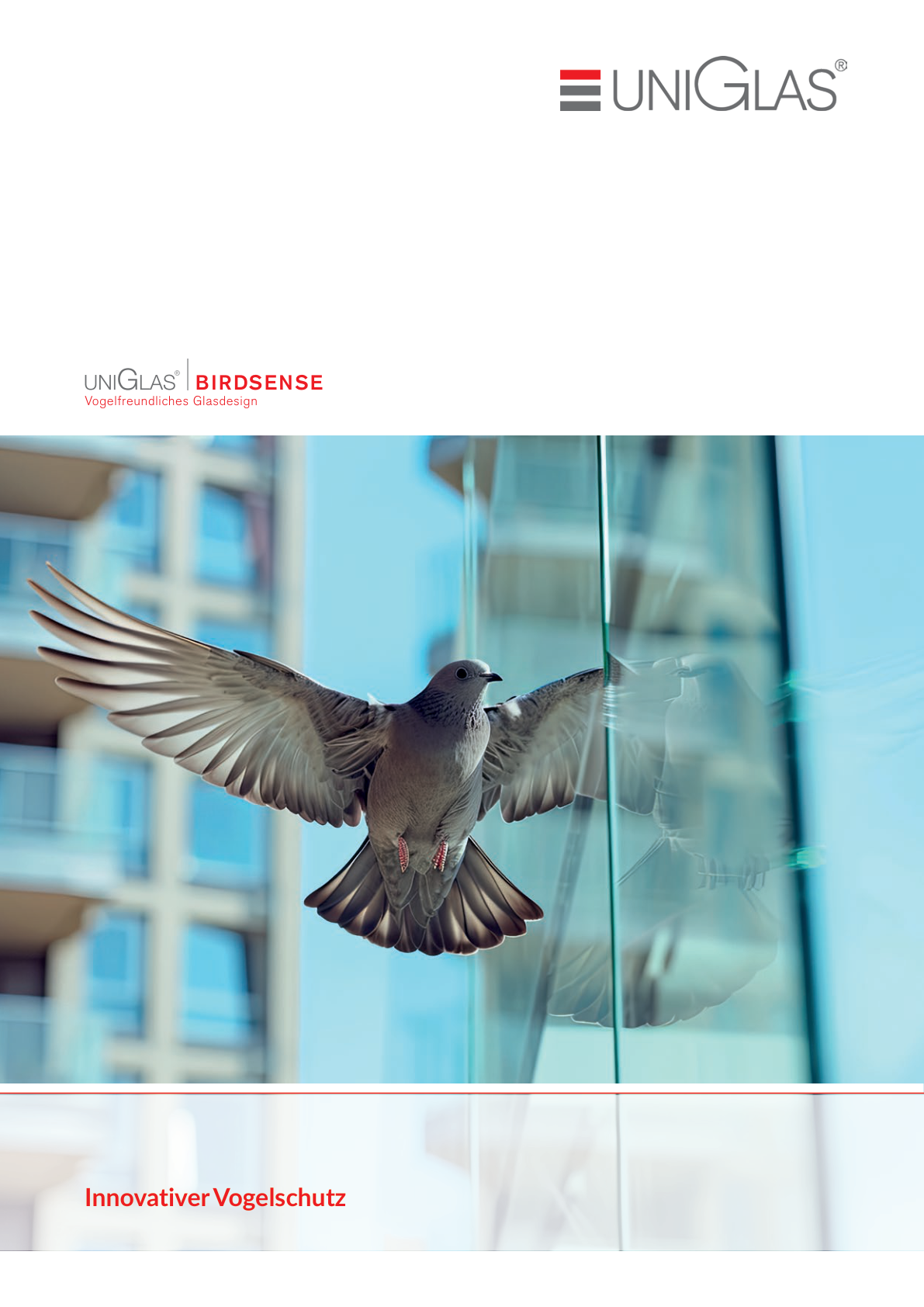
UNIGLAS® | BIRDSENSE – bird protection glass
UNIGLAS® | BIRDSENSE is an innovative bird protection glass for reducing bird collisions with glass façades. Effective markings, special coatings and structured glass solutions carefully reduce transparency and reflection while also offering a high level of design freedom and considering current nature conservation requirements.
UNIGLAS® | BIRDSENSE
Bird collisions with glass façades are a central topic in the field of modern structural engineering. Birds are unable to detect transparent and highly reflective glass surfaces as obstacles. At the same time, nature and species conservation laws require avoidable animal losses to be considered right from the planning stage.
UNIGLAS® | BIRDSENSE offers a permanently integrated solution for bird-friendly architecture.
How does bird protection glass work?
Effective bird protection reduces the transparency and reflective properties of glass. This is achieved through high-contrast markings, structured surfaces or special coatings.
Examples include:
- Line or dot grids with certified effectiveness
- Extensive patterns that enable birds to detect glass as an obstacle
- UV-reflective coatings
- Anti-reflective or structured writing
- Laminated safety glass with an integrated patterned interlayer
- Patterned glass with a structured surface
What rules apply?
At present, there is no specific DIN or EU standard for bird protection glass. Assessments are performed based on the scheme published by the German Working Group of Bird Protection Stations (LAG-VSW). Products are furthermore scientifically tested through the use of wind tunnel tests, for example by the Ornithological Institute in Sempach.
Added value for planning and architecture
BIRDSENSE combines:
- suitable façade planning
- sustainable species protection
- architectural design freedom
- permanent integration into the building envelope
In short: UNIGLAS® | BIRDSENSE makes glass visible to birds – while also preserving the aesthetic appeal of modern glass architecture.
DOWNLOAD
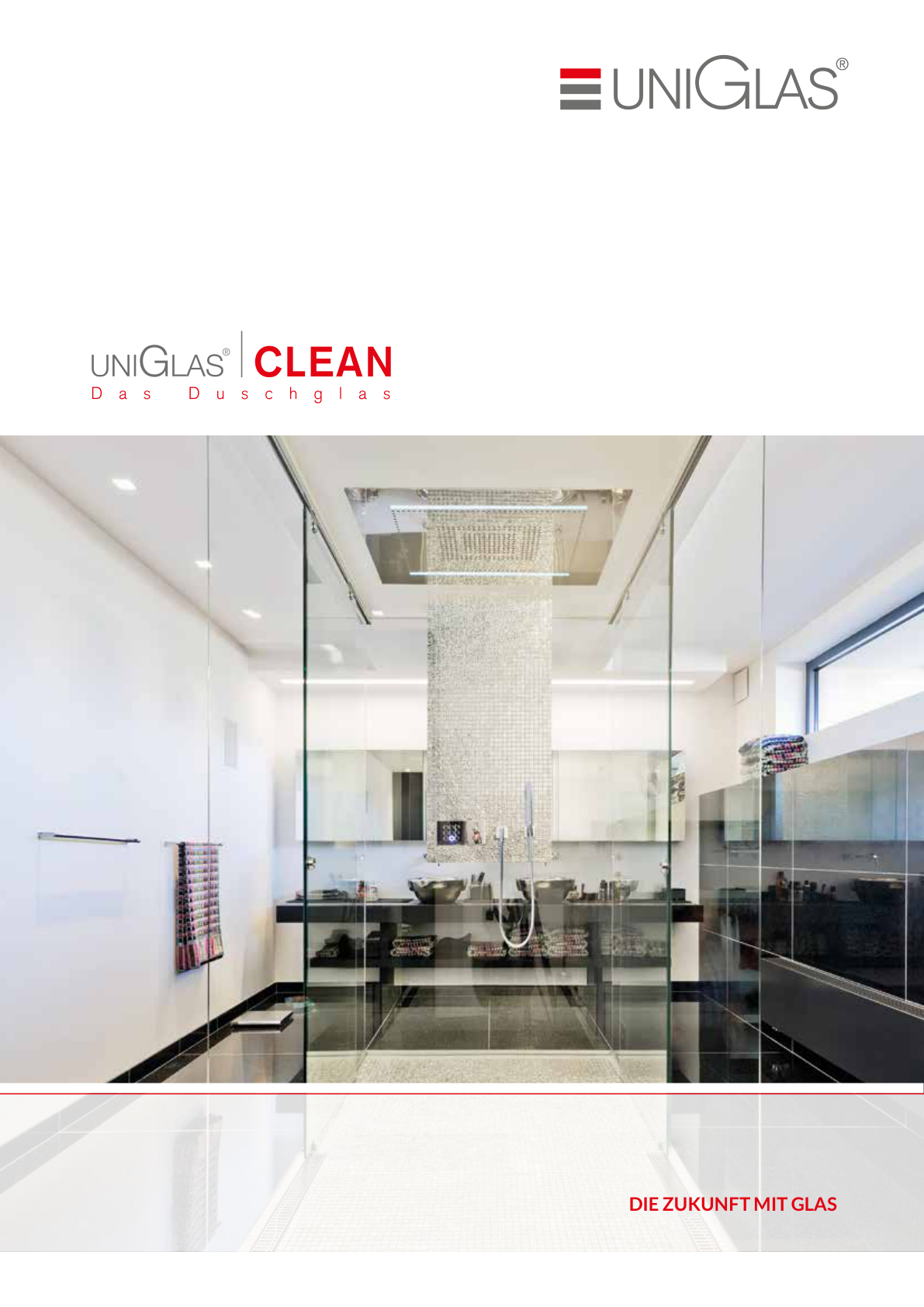
UNIGLAS® | CLEAN – the shower glass
UNIGLAS® | CLEAN is a permanently enhanced shower glass with an invisible protective coating to combat glass corrosion, lime deposits and soap residues. It remains transparent, colour-neutral and brilliant, is particularly easy to clean and hygienic, and is suitable for modern all-glass showers, shower screens and fully accessible bathroom solutions.
UNIGLAS® | CLEAN
Lime, soap residues and moisture permanently attack conventional shower glass, leading to glass corrosion, matt spots and more cleaning.
UNIGLAS® | CLEAN features a coating that is permanently bonded to the glass surface ex-works for easy-care and corrosion-resistant shower glass.
How does coated shower glass work?
The almost invisible finish is activated during the production process and permanently bonded to the glass. This makes the surface more resistant to moisture, chemicals and lime. Dirt finds it harder to adhere to the glass and is easier to remove.
This is achieved through:
- a permanent surface finish
- float glass or low-iron-oxide white glass
- activation during the pre-stressing process
Properties and added value
- High transparency and colour neutrality despite integrated
protective coating
- Far less cleaning work and better hygiene through reduced lime and dirt adhesion
- Permanent protection against glass corrosion with long-lasting brilliance
- Durable, robust surface resistant to moisture and
conventional cleaning agents
Suitable for use for shower partitions, all-glass showers and rear walls with a thickness of 6–10 mm, including as white glass or with a decorative finish.
In short: UNIGLAS® | CLEAN offers permanently protected, hygienic and attractive shower glazing.
DOWNLOAD
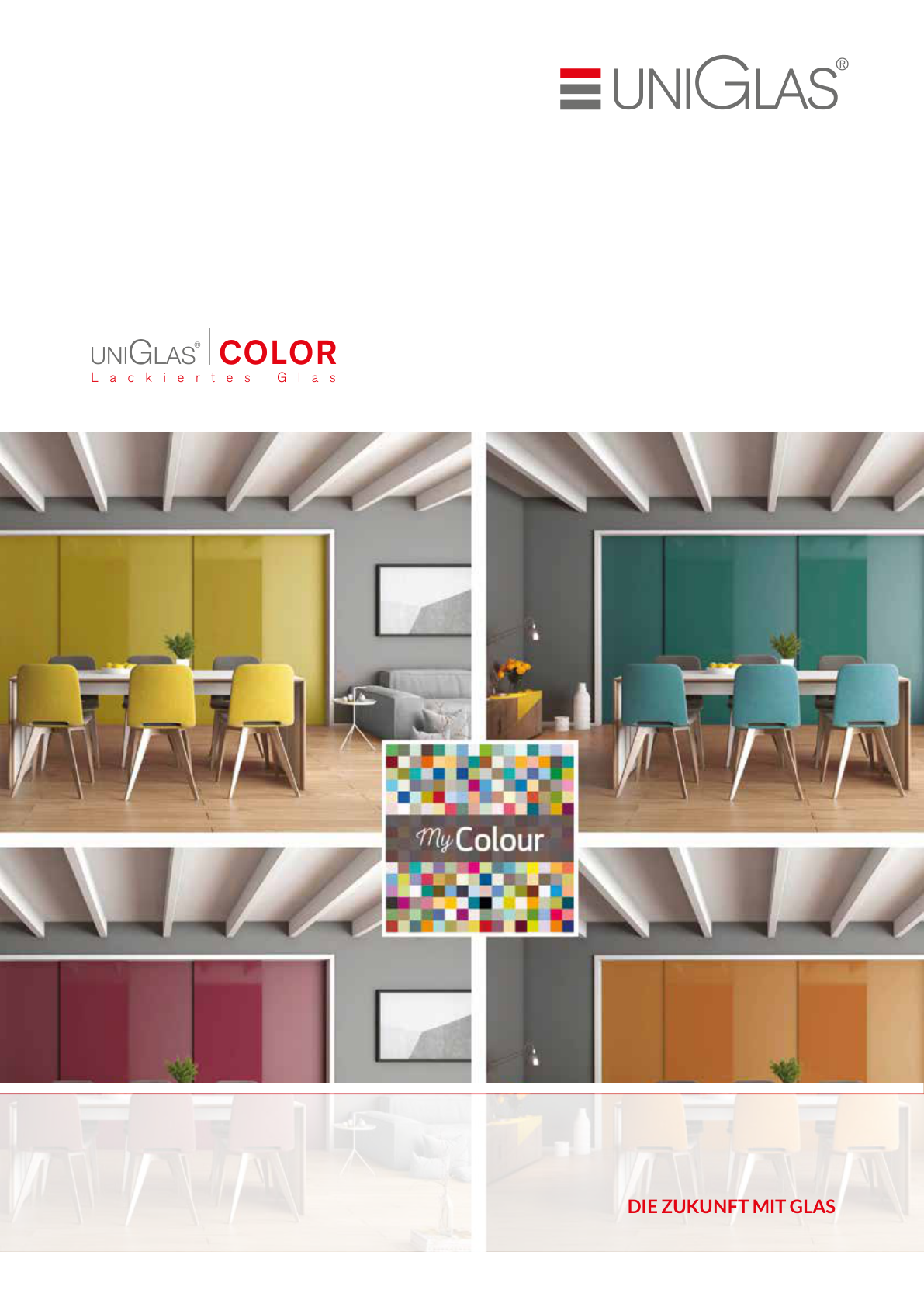
UNIGLAS® | COLOR – painted glass
UNIGLAS® | COLOR is high-quality, painted glass for stylish wall coverings and furniture design in indoor areas. Available in multiple colours – both glossy and matt – it offers maximum design freedom coupled with permanent surface brilliance.
UNIGLAS® | COLOR
Colour shapes rooms and creates atmosphere. UNIGLAS® | COLOR results in high-quality wall coverings and furniture solutions made of painted glass in contemporary colours. The large selection of identical shades enables harmonious or contrasting design concepts for sophisticated interior designs.
How is UNIGLAS® | COLOR painted?
A high-quality, even covering of paint is applied to the back of the glass and permanently bonded with the surface. Depending on the design, a brilliant high-gloss look or a refined, satin-finished surface is created. An additional protective film on the painted side increases safety and durability.
Properties and added value for planning and interior design
- Large selection of identical colours in matt and high-gloss versions
- Custom colours on request (minimum quantity required)
- Environmentally friendly paint with very low emissions for high interior quality
- Simple installation as with mirror glass
Water and moisture resistant for durable indoor applications, suitable for wall coverings, sliding doors and indoor furniture – not suitable for outdoor applications or glazing with insulating glass.
In short: UNIGLAS® | COLOR equals colour-intensive, durable glass solutions with a high-quality surface – ideal for stylish, modern interiors designed to meet high architectural standards.
DOWNLOAD
Sound and sound insulation
Why sound insulating glazing is so important
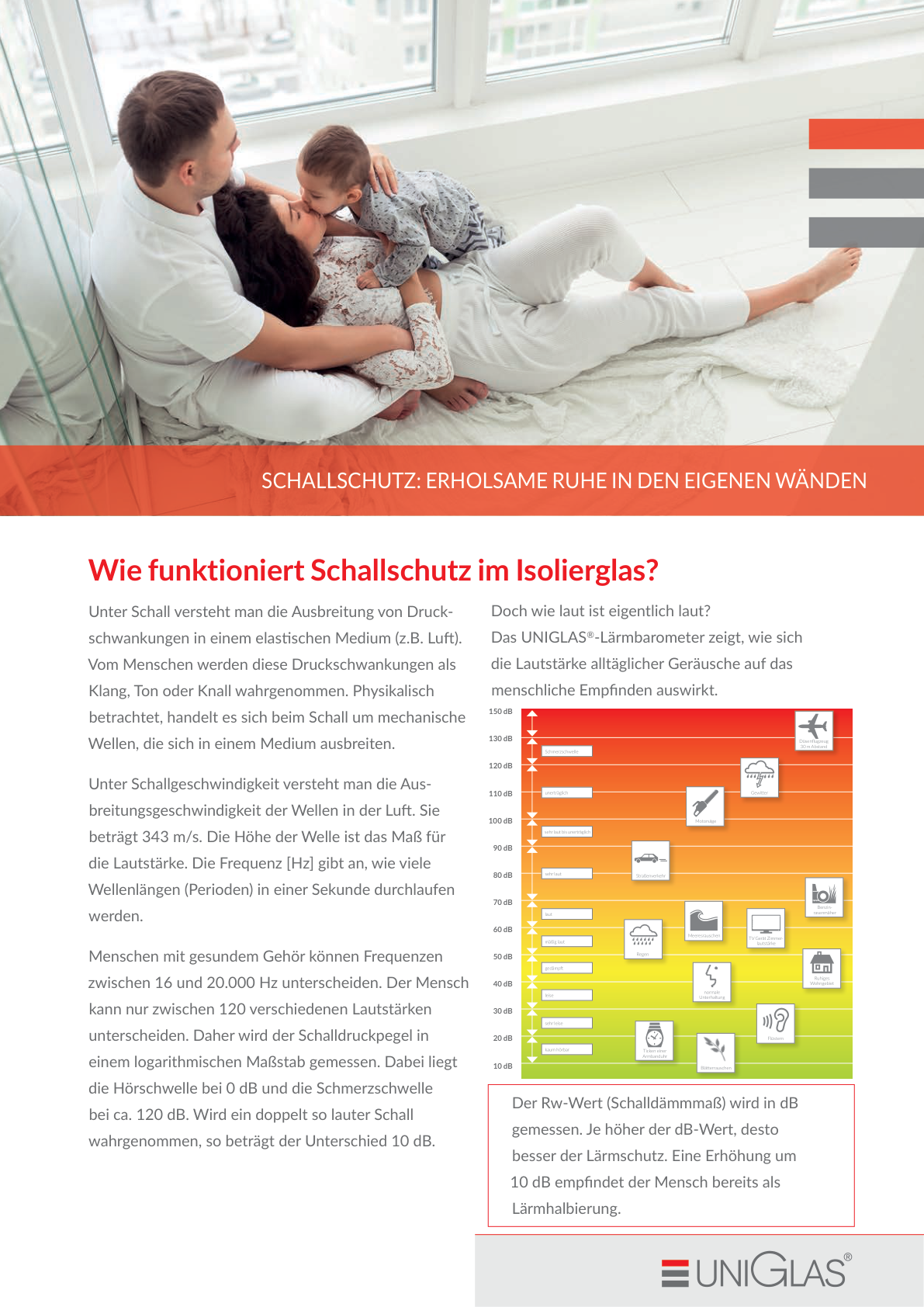
Traffic, industrial activity and urbanisation are leading to increasing levels of noise pollution. Permanent noise affects our health and concentration. High-quality sound insulating glass significantly reduces this strain.
How is sound insulation measured?
The sound reduction index Rw is specified in decibels (dB). An increase of 10 dB is subjectively perceived as halving the noise.
In addition, spectrum adaption terms C and Ctr are taken into account in order to realistically assess different noise sources, such as road traffic or low-frequency noises.
Technical explanation
Effective sound insulation is created through the use of:
- asymmetrical glass designs
- different glass thicknesses
- larger cavities
- laminated safety glass with a special sound insulating interlayer
In the case of triple insulating glass, the outer panes are particularly relevant for sound insulation.
Planning advice
The choice of sound insulation category should always be based on the actual noise source. Two windows with the same Rw value can have a very different frequency response.
In short: sound insulating glass noticeably improves quality of life and concentration. The right glass structure effectively reduces noise – even in heavily affected locations.
DOWNLOAD
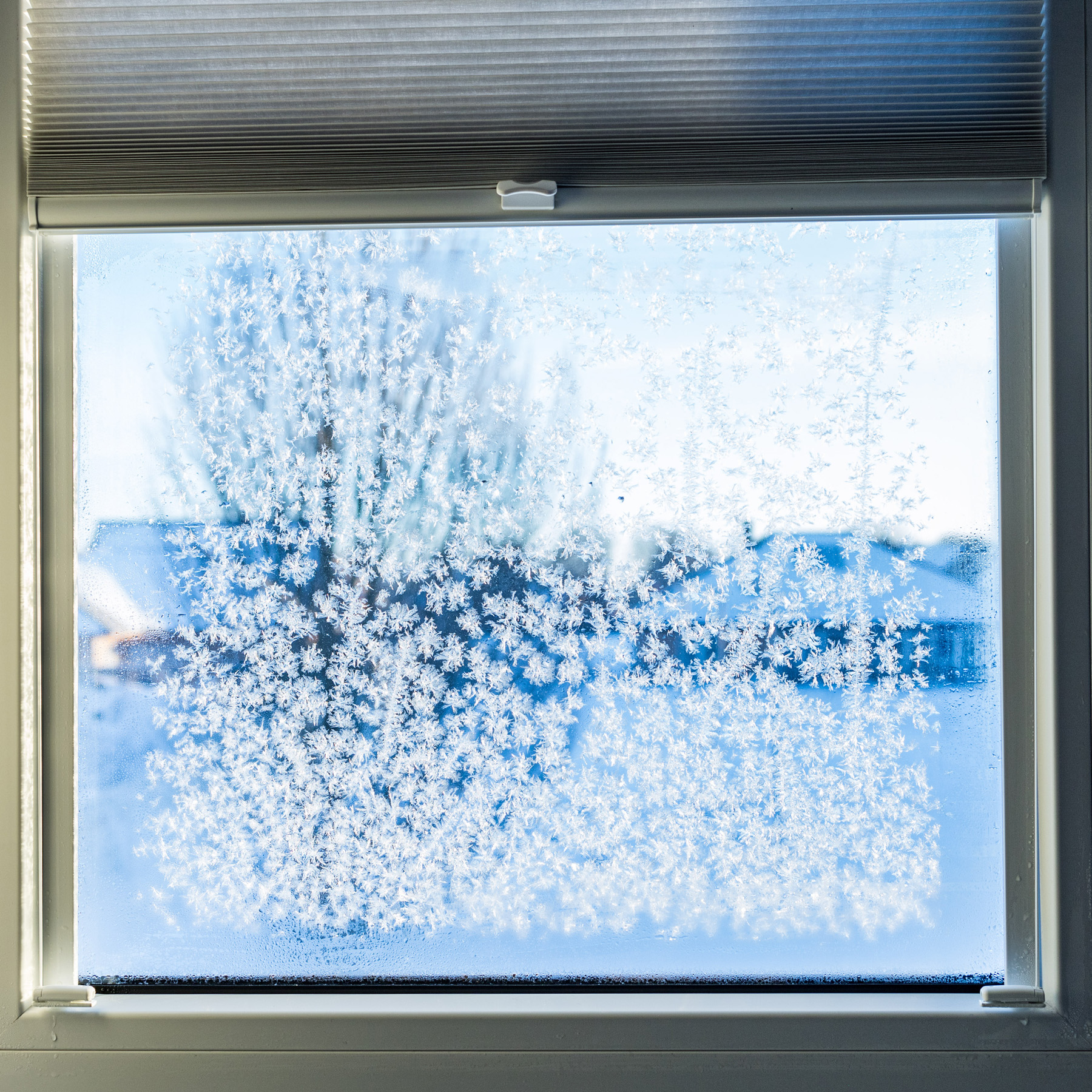
UNIGLAS® | INFORM – external condensation on window panes
Windows that fog up on the outside show that their thermal insulation is working excellently. Dew forms on their exterior after clear, cold nights in particular due to the major temperature differences between the outside and the inside thanks to the excellent thermal insulation of quality insulating glass. This natural phenomenon disappears of its own accord with the first rays of sunlight and is a sign of the high energy efficiency of the glazing.
External condensation
Why modern windows fog up on the outside
When new thermal insulating glazing solutions are installed, especially high-performance insulating glass such as UNIGLAS® | TOP, people occasionally notice that condensation forms on the external panes on cold, clear mornings.
This phenomenon, which was rarely seen with older windows, is now becoming more common. However, this is not a defect, but a sign of outstanding thermal insulation.
Physical background
All objects radiate heat to their surroundings until a temperature equilibrium is reached. On clear nights, the glass surface can cool down a great deal by radiating heat to the cold night sky.
If the external pane is cooler than the ambient air and the humidity is high, the dew point is dropped below and condensation forms on the external glass surface.
The key difference from older glazing is that insulating glass used to have far higher U values. Some of the heat energy escaped outside and unintentionally warmed the external pane.
Is external condensation a product defect?
No – on the contrary, external condensation is a sign of quality that indicates outstanding thermal insulation. It shows that:
- little thermal energy is being lost to the outside
- the energy efficiency of the building is high
- modern glazing technology has been used
In short: external condensation is a sign of outstanding thermal insulation. The heat energy remains in the room instead of being released outside.
DOWNLOAD
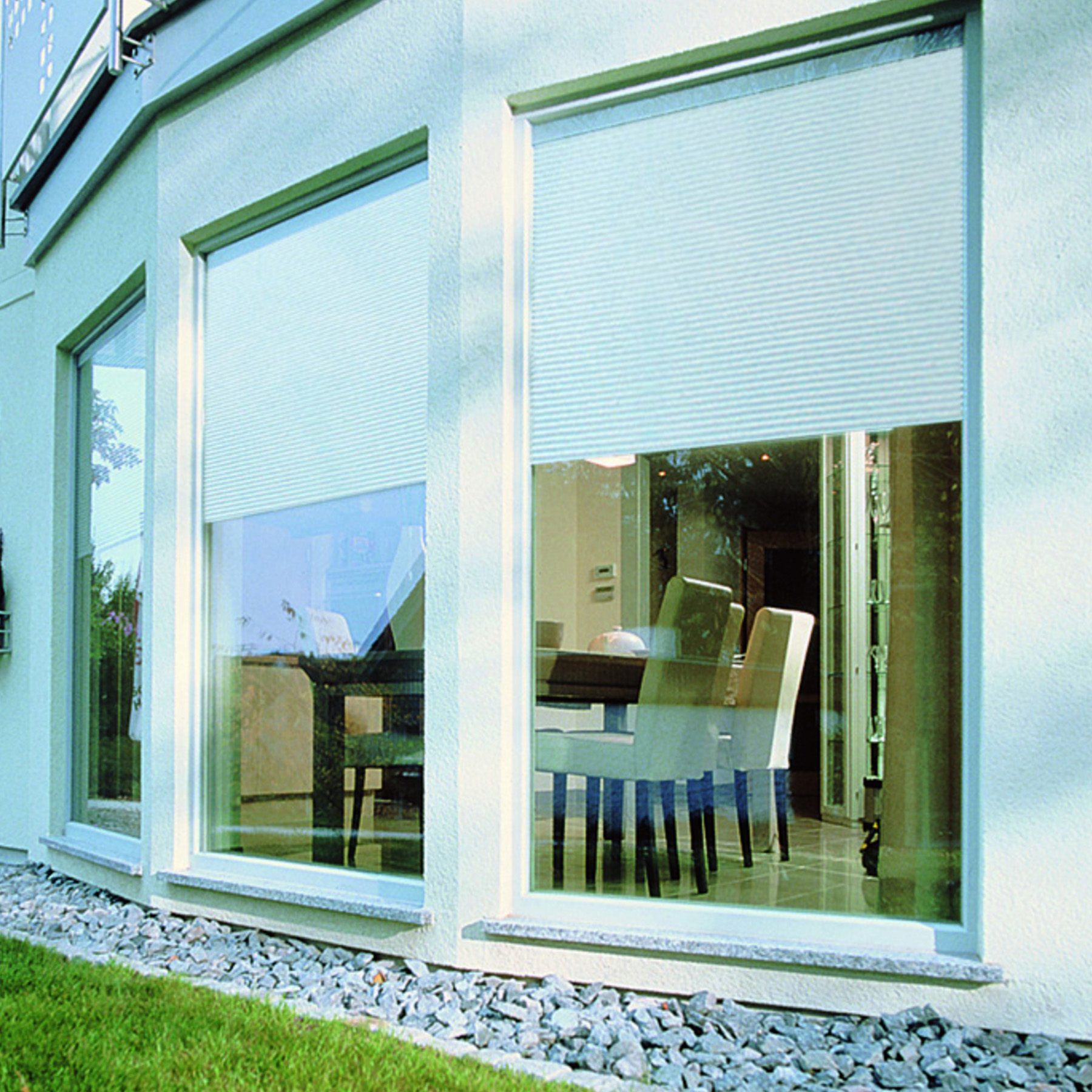
UNIGLAS® | INFORM – glass breakage due to shadows on the glass
Glass breakage due to deep shadows results from the uneven heating of the glass pane, for example as a result of partial shading. This leads to thermal stresses, which can cause float glass to break on reaching temperature differences of around 40 kelvins. The use of toughened safety glass significantly increases the thermal shock resistance and practically eliminates the risk of thermally induced glass breakage.
Glasbruch durch Glasschatten
Warum Glas ohne äußere Einwirkung brechen kann
Glas reagiert empfindlich auf Temperaturunterschiede. Wird eine Scheibe partiell erwärmt - etwa durch Teilverschattung oder Sonneneinstrahlung - entstehen Spannungen im Glasquerschnitt.
Kritische Temperaturdifferenzen
Bereits ein Temperaturunterschied von 40 Kelvin kann die Zugfestigkeit von Floatglas überschreiten.
Warum ESG widerstandsfähiger ist
Durch thermisches Vorspannen entsteht Einscheibensicherheitsglas (ESG). Dieses erhöht die Temperaturwechselbeständigkeit auf etwa 200 Kelvin.
Besonders bei:
- eingefärbten Gläsern
- großen Formaten
- stark exponierten Fassaden, z.B. durch intensive Sonnenstrahlungen
ist ESG eine wirksame Vorsorgemaßnahme.
Kurz gesagt: Thermischer Glasbruch entsteht durch Temperaturspannungen. ESG reduziert dieses Risiko deutlich und erhöht die Sicherheit von Verglasungen.
DOWNLOAD

UNIGLAS® | INFORM – shielding effect of low-e glass
Modern low-e glass can significantly reduce electromagnetic radiation from mobile phones. Glass types like UNIGLAS® TOP energy-saving glass with high thermal insulation properties reflect up to 99.9% of electromagnetic waves depending on the frequency range and combine effective shielding with high energy efficiency.
Shielding
Reduce electromagnetic radiation – with UNIGLAS® insulating glass
Electromagnetic radiation is part of our everyday lives today. Mobile communications, Wi-Fi and other wireless technologies provide great convenience. At the same time though, many people are increasingly looking for protection in their own home or their working environment.
Modern low-e glass solutions from UNIGLAS® play an important role here.
How does shielding work?
Special coatings on the glass with high thermal insulation properties reflect a large proportion of electromagnetic waves. These include mobile and Wi-Fi frequencies of between around 900 Mhz and 3.8 GHz. Depending on the design, these coatings can shield up to 99.9% of the radiation.
What exactly does that mean?
The shielding effect is referred to in technical terms as shielding attenuation and measured in decibels (dB).
Even an attenuation of 20 dB reduces the radiation exposure to 1% – equating to a shielding degree of 99%.
Twice the benefit with UNIGLAS® insulating glass
Insulating glass such as UNIGLAS® | TOP energy-saving glass combines two key benefits:
- High energy efficiency through modern heat insulation coatings
- Effective reduction of electromagnetic radiation inside buildings
This enhances comfort in both home and working environments – without additional technical measures.
Ideal for modern, sustainable construction
The conductive, largely metallic coatings in the UNIGLAS® insulating glass range are an example of how intelligent glass design can simultaneously fulfil multiple requirements.
For example, saving energy, increasing comfort and supporting a healthy indoor climate.
In short: UNIGLAS® insulating glass not only protects against cold and heat but can also effectively reduce electromagnetic radiation – efficiently, invisibly and as a permanently integrated part of the building envelope.
DOWNLOAD
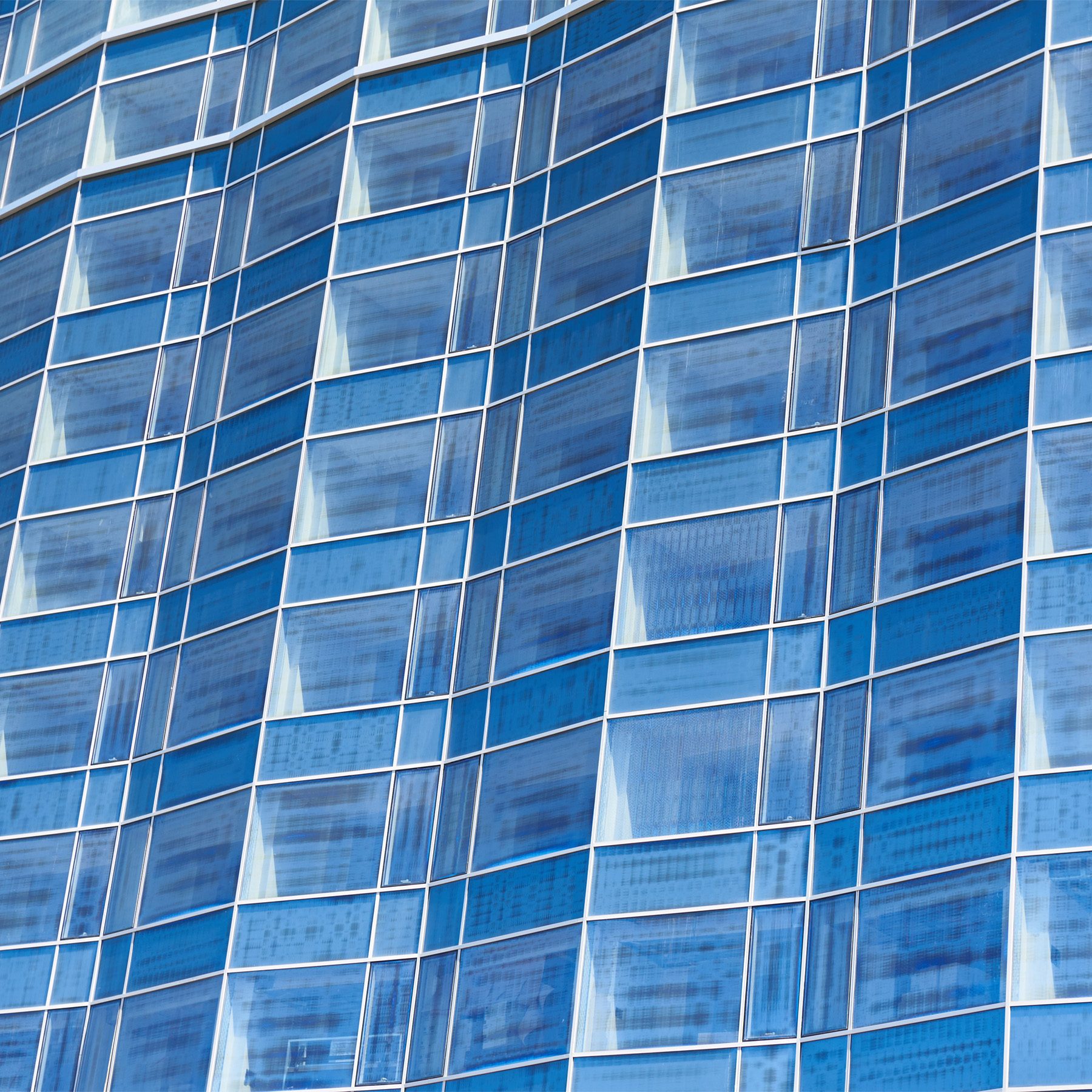
UNIGLAS® | INFORM – can toughened safety glass or heat strengthened glass be anisotropy free?
Anisotropy is a physically induced interference effect in toughened safety glass or heat strengthened glass. It is caused by areas of stress within the glass and only visible under certain lighting conditions. DIN SPEC 18198 solely regulates the measurement of anisotropic effects – it is not a DIN standard and does not require glass to be anisotropy-free.
Anisotropy
What is anisotropy?
Anisotropy refers to optical effects that can occur in thermally toughened glass. Iridescent patterns appear under certain lighting conditions.
These are caused by areas of stress within the glass, which interact differently with polarised light – a physically unavoidable effect.
DIN SPEC 18198 – what actually applies?
DIN SPEC 18198 solely describes the measurement and evaluation methods for anisotropic effects.
It:
- does not define a threshold
- does not demand anisotropy-free glass
- is not a DIN standard or technical building regulation
Economic classification
Artificially reducing anisotropy increases production waste and therefore energy and material consumption.
In short: anisotropy is a physically unavoidable effect in toughened safety glass and heat strengthened glass. It is not a product defect.
DOWNLOAD
UNIGLAS® | INFORM – insulating glass and materials compatibility
The materials compatibility associated with insulating glass is a decisive factor for function and durability. Different materials can cause interactions such as plasticiser migration. Tested system solutions, clear specifications and the close coordination of all parties involved are therefore essential.
Materials compatibility A5
Why materials compatibility is crucial
Insulating glass units are used in complex window and façade systems. If different materials such as sealants, spacers, setting blocks and frame profiles come into contact with each other, harmful interactions can occur.
Materials are only compatible if they do not impair the function of the overall system when combined.
Technical background
Migration is at the heart of the matter, especially plasticiser migration.
The prerequisites include:
- contact between different materials
- components capable of migration
- a concentration gradient
- temperature as an accelerating factor
The consequences can include:
- dissolution of the butyl seal
- loss of gas and moisture tightness
- reduced adhesion of spacers
- unstable setting blocks
Technical influencing factors
Materials compatibility is primarily determined by:
- direct contact between unsuitable sealants and the edge seal
- the choice of material for spacers and setting blocks
- correct joint sizing
- system complexity and temperature load
The more complex the system, the greater the risk of harmful interactions.
Responsibility and practice
There is no standardised universal test. The responsibility lies with the ‘system manufacturer’, i.e. the company that combines the components.
This makes careful system testing and the coordinated selection of materials essential.
In short: materials compatibility is decisive when it comes to the service life of insulating glass. Migration and unsuitable material combinations can destroy the edge seal. Only tested, coordinated systems ensure lasting impermeability and function.
UNIGLAS® | INFORM – insulating glass and materials compatibility (abridged version)
The materials compatibility associated with insulating glass is a decisive factor for function and durability. Different materials can cause interactions such as plasticiser migration. Tested system solutions, clear specifications and the close coordination of all parties involved are therefore essential.
Materials compatibility
Why materials compatibility is crucial for insulating glass
Modern insulating glass units are highly developed components. They consist of glass, edge seals, spacers, sealants and a frame structure. For these components to remain functional over the long term, their materials compatibility must be ensured. Even minor interactions can significantly impair the service life of insulating glass.
How do harmful interactions arise?
According to DIN 52460, substances are compatible if no harmful interactions occur. Physicochemical processes, such is the migration of plasticisers, are particularly critical. These processes involve components migrating from adjacent materials into the edge seal of the insulating glass.
Such interactions can:
- cause sealants to soften or become brittle
- impair gas tightness
- increase moisture absorption in the cavity
- lead to the failure of the insulating glass in the long term
Complex material combinations therefore require systematic coordination between suppliers, system providers and processors.
Importance for planning and implementation
The more complex the façade or window system, the more important a documented system test. Individual components must only be changed if this does not affect the functionality of the overall system.
In short: materials compatibility ensures the functionality of insulating glass units. Only coordinated systems with tested components guarantee lasting energy efficiency, impermeability and safety.
UNIGLAS® | INFORM – maximum enjoyment of light, minimum heat build-up
Heat insulation in summer
Why heat insulation in summer is becoming increasingly important
Rising average temperatures and ever-more frequent hot days are increasing the demands on buildings. Whereas heat insulation in winter is subject to strict legal regulations, heat insulation in summer is often underestimated.
Technical effect of solar control glass
Modern solar control glazing can reduce the solar heat transmittance through glass surfaces by up to 50%.
At the same time, low U values (up to 0.5 W/m²K) are preserved, saving heating energy in winter.
Energy benefits
- Reduction of the cooling load of air conditioners
- Lower operating costs
- Improved indoor climate
- Sustainable energy savings
In many cases, it suffices to replace the glazing on the south and west sides without replacing the entire window.
In short: solar control glass combines winter heat insulation with effective heat reduction in summer. This sustainably reduces energy consumption, enhances comfort and increases building efficiency.
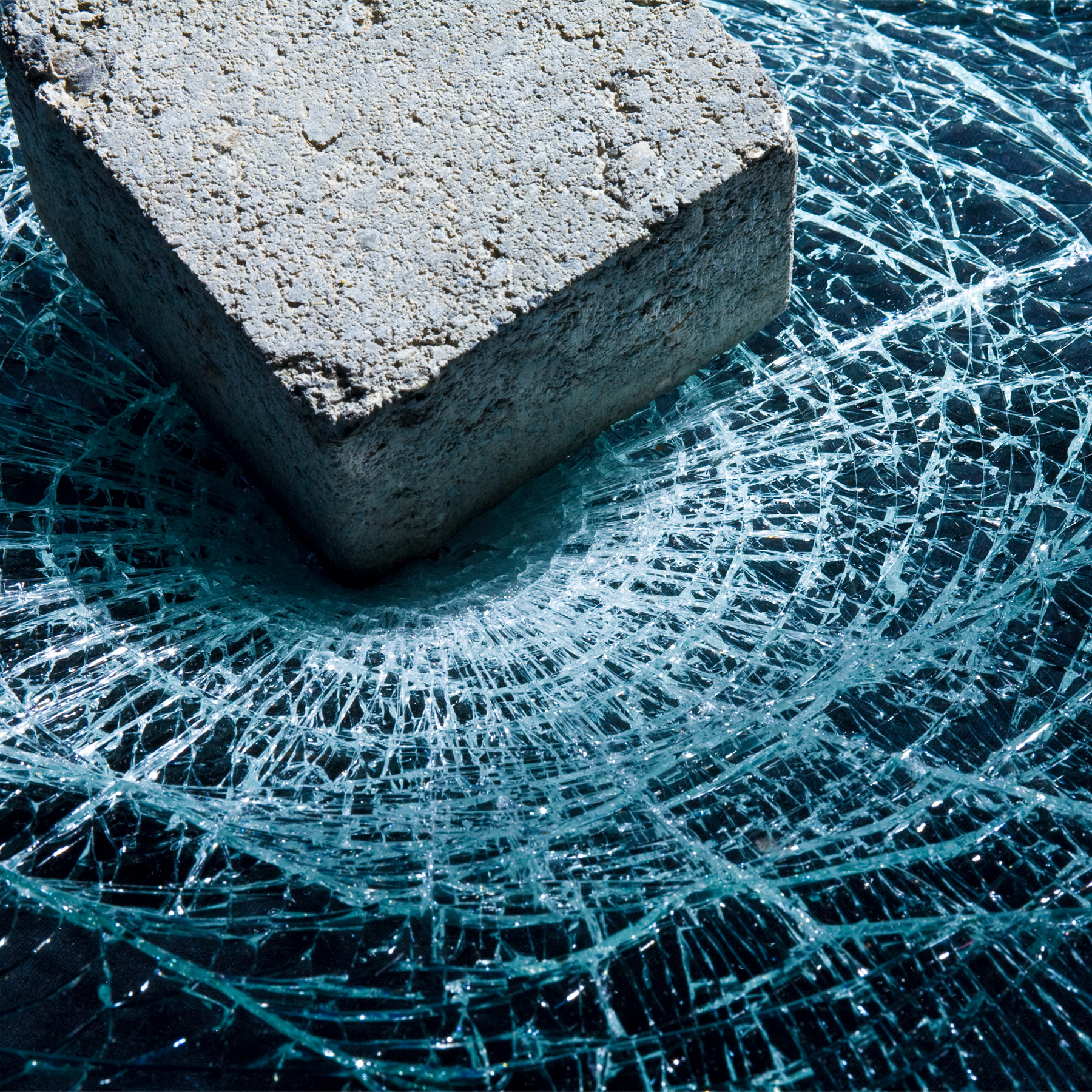
UNIGLAS® | INFORM – safety glass: resistance categories
UNIGLAS® | SAFE safety glass significantly increases burglar resistance and personal protection. Depending on requirements, tested impact, penetration and bullet-resistant glazing is available in various resistance categories to help improve active and passive safety.
UNIGLAS® | SAFE – safety glass and resistance categories
Safety glass for actively protecting properties and people
Penetration-resistant glazing is becoming increasingly important. Safety glass does not just protect material assets but also people. A differentiation is made between active safety properties (burglary, bullet or explosion resistance) and passive safety properties (injury prevention).
What resistance categories are there?
UNIGLAS® | SAFE covers all relevant resistance categories:
- Impact resistance (P1A-P5A)
- Penetration resistance (P6B-P8B)
- Bullet resistance (BR categories)
- Resistance against explosion pressure (ER categories)
All test procedures simulate real loads, e.g. with metal balls or axe strokes.
Normative classification
DIN EN 1627 recommends certain types of glazing depending on the RC category, for example:
- RC2 → P4A
- RC3 → P5A
- RC4 → P6B
The higher the category, the longer the glass withstands an attack – a crucial time factor in burglar resistance.
Areas of application
From residential buildings to exclusive villas, museums and data centres, the right resistance category depends on the individual safety and security requirements.
In short: UNIGLAS® | SAFE safety glass meet the highest safety and security standards. The right resistance category sustainably increases burglary protection, personal safety and the building value.
DOWNLOAD
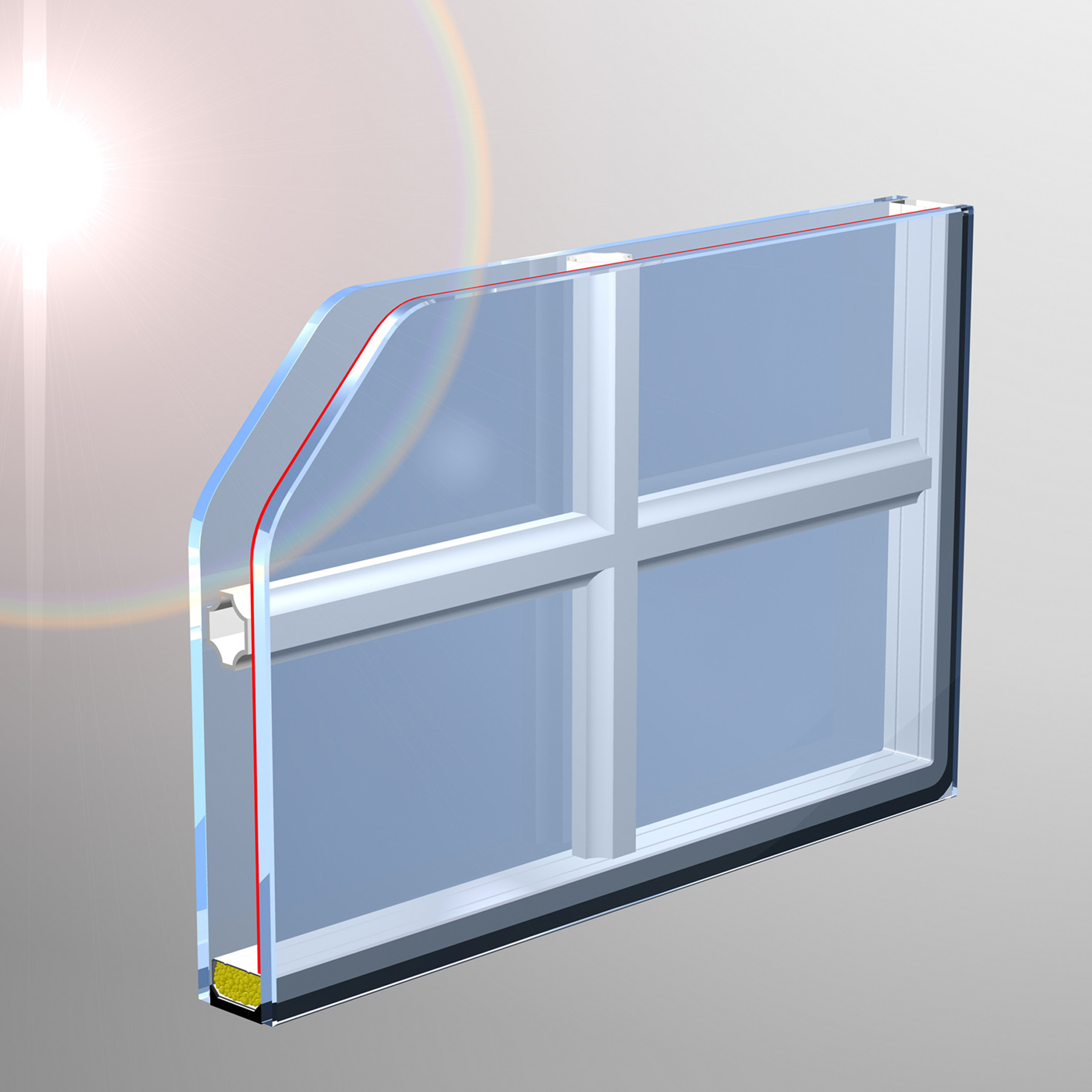
UNIGLAS® | INFORM – sash bar insulating glass – rattling: an unavoidable phenomenon?
Sash bars in the cavities within insulating glass offer great creative freedom and simple maintenance. However, the larger the glass surfaces, the more susceptible the sash bars are to vibrations and consequently rattling noises. This phenomenon can be effectively minimised through smaller fields, wider cavities and suitably sized panes.
Rattling sash bars
Design with inner sash bars
Sash bars in the cavity of insulating glass are a popular design feature. They facilitate classic window looks, such as country-cottage style or authentic renovations, without the energy disadvantages of glass-dividing sash bars.
Physical limits
Despite their many benefits, sash bars in cavities are subject to basic physical conditions.
The sash bar grille is structurally attached to the edge. As the pane size increases and the field formats become larger, the intrinsic stability within the insulating glass unit decreases.
Furthermore:
- The pressure conditions in the cavity differ from those outside the glazing.
- Temperature and air pressure fluctuations influence the volume in the cavity.
- Acceleration forces are created if windows or doors are opened or closed suddenly.
- Vibration from traffic or the wind can trigger additional oscillations.
Under certain conditions, these movements may overlap. In such cases, the sash bar grille can swing minimally against the glass surface or move within its mounting. If resonance conditions are reached, the movement can oscillate, resulting in audible rattling sounds.
Important: this is not a material defect but physically explainable vibration behaviour.
Advice
The following measures are recommended to minimise rattling noise:
- More partitions with large pane formats
- Wider cavity with asymmetrical glass structure
- Oversized panes to reduce deformation under load and vibration
Early coordination between the planner, window manufacturer and insulating glass manufacturer significantly increases operational reliability.
In short: rattling sash bars are a physical phenomenon. Proper planning can significantly reduce the noises.
DOWNLOAD
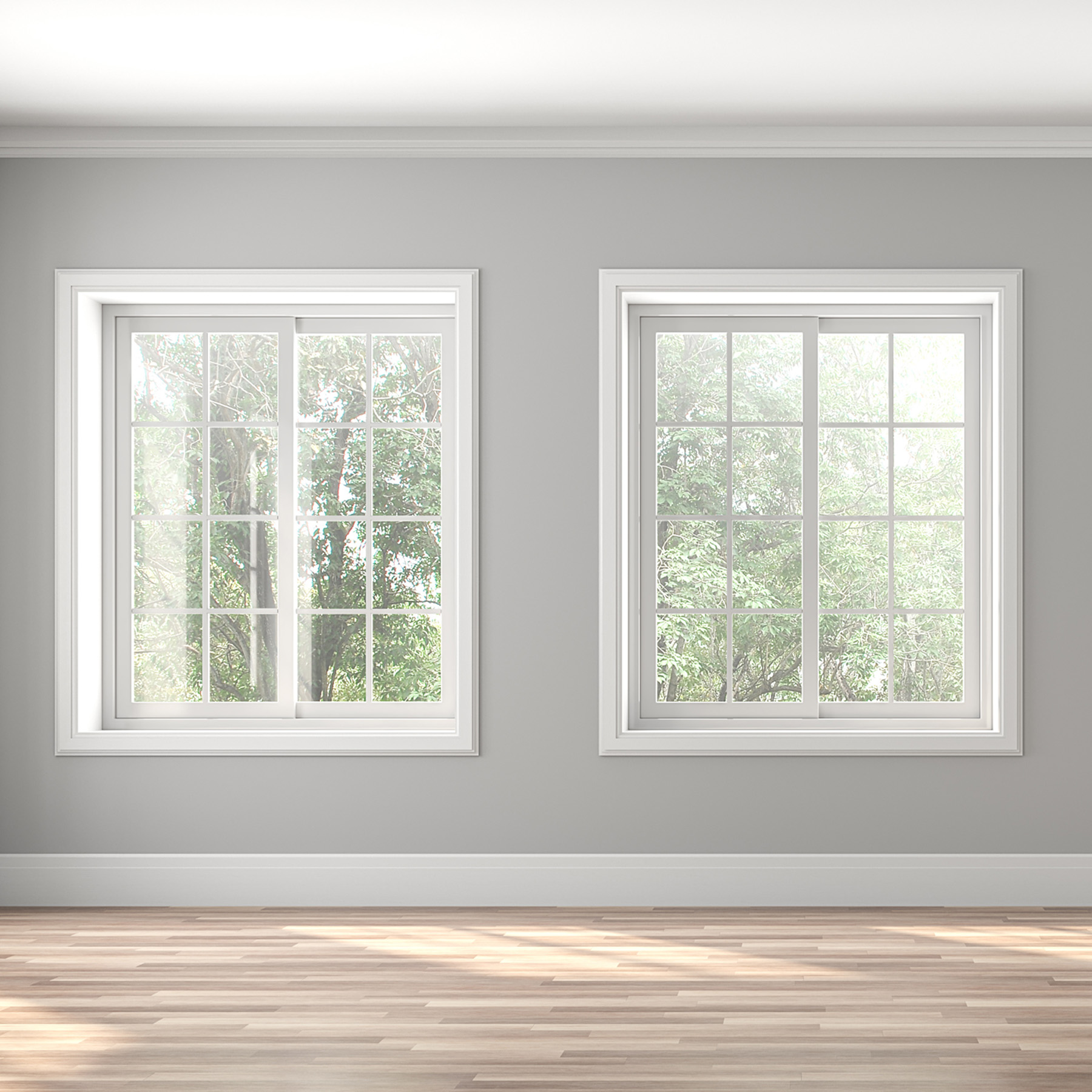
UNIGLAS® | INFORM – calculating the Uw value of gregorian windows
Sash bars in insulating glass affect the Uw value of windows and are thermal weak points. Flat-rate mark-ups in line with EN 14351-1 are now considered outdated and often lead to unfavourable results. With DIN EN ISO 10077-1 new, practice-oriented sash bar Psi values enable a more realistic calculation and (in most cases) far better Uw values for modern gregorian windows.
Calculating the Uw value of gregorian windows
Why sash bars influence the Uw value
Sash bars in insulating glass are an attractive design feature but act as linear thermal bridges from a technical perspective. Like the spacer in the edge seal, they are classed as ‘imperfections’ that must be considered when determining the heat transmittance coefficient (Uw) of a window.
Evaluations were previously performed using flat rate mark-ups in accordance with EN 14351-1. However, these mark-up values are based on outdated technological standards and often result in unfavourable Uw values.
New calculation according to EN ISO 10077-1
DIN EN ISO 10077-1 makes it possible to conduct a detailed and more realistic calculation. The linear heat transmittance coefficient of the sash bar (Ψgb) is considered and multiplied by the total length of the sash bars.
Influencing factors include:
- Coating (low-e)
- Thermal conductivity of the sash bar material (aluminium or plastic)
- Distance a between the glass and the sash bar
- Sash bar width b
Practical relevance
Realistic and often better Uw values can be determined for CE marking and declarations of performance. The precise calculation is particularly worthwhile in the case of triple glazing.
In short: the energy properties of gregorian windows can assessed far more precisely by performing a calculation in accordance with EN ISO 10077-1. Precise Ψgb values often lead to better Uw results than flat-rate mark-ups.
DOWNLOAD
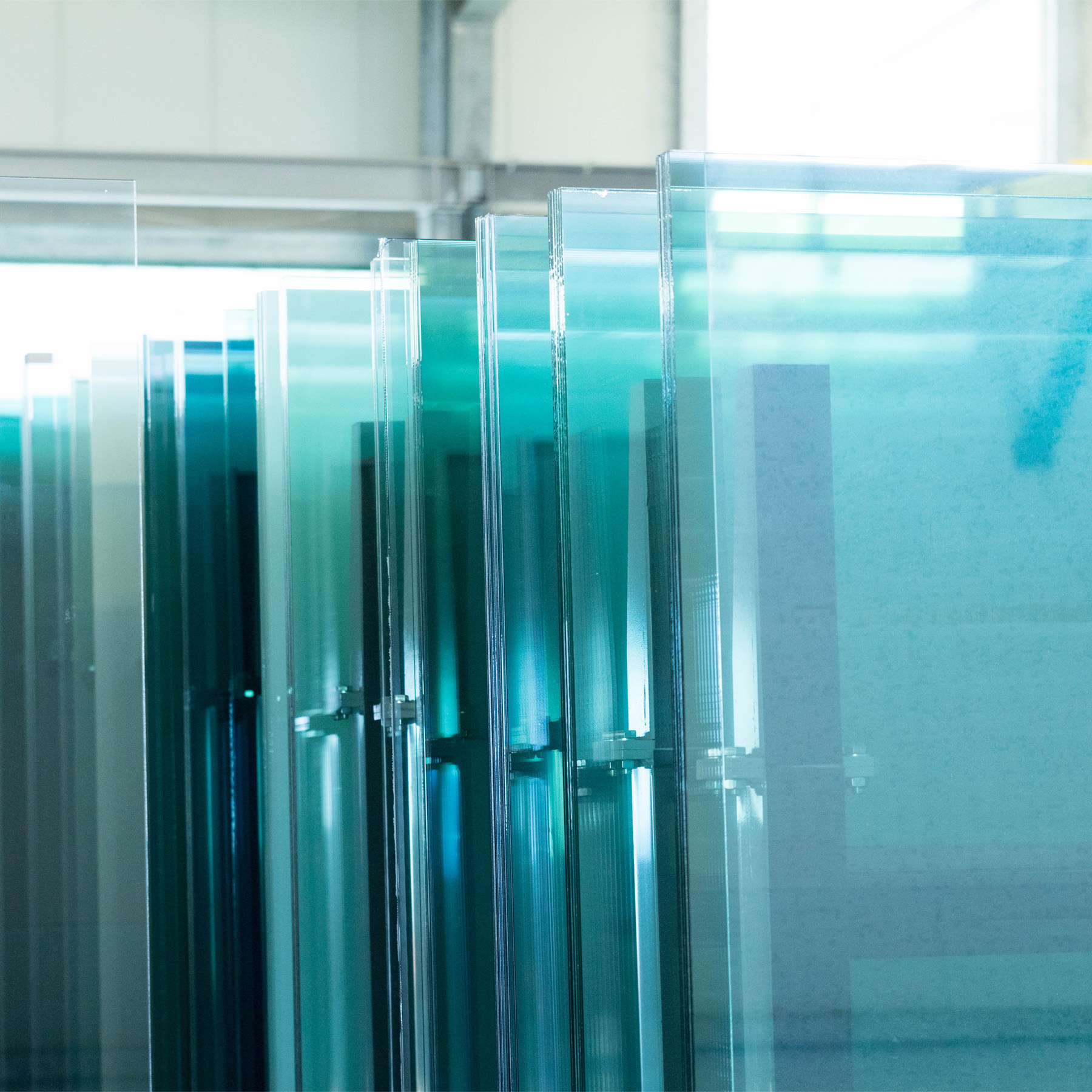
UNIGLAS® | INFORM – comparison of the properties of toughened and laminated safety glass
When choosing between toughened and laminated safety glass, the latter offers clear advantages in many applications. Laminated safety glass remains stable even in the event of breakage, binds shards, offers impact resistance and is at zero risk of spontaneous breakage. With a lower weight and higher flexural strength, toughened safety glass, on the other hand, is primarily suited for areas where elevated shock resistance or thermal shock resistance is required.
Toughened safety glass vs. laminated safety glass
Choosing the right safety glass
Building regulations categorise both toughened and laminated safety glass as break-resistant construction materials. However, their properties differ greatly.
Technical comparison
Fracture behaviour:
- Toughened safety glass breaks into blunt-edged fragments without residual stability.
- Laminated safety glass has a PVB interlayer that holds it together even after its breaks.
Burglar resistance: Laminated safety glass offers impact resistance in accordance with EN 356 (e.g. P2A from 33.2, P4A from 33.4).
Spontaneous failure: Toughened safety glass has a statistical risk of spontaneous failure (avoidable through a heat-soak test) whereas laminated safety glass does not.
Thermal shock resistance: Toughened safety glass has high thermal resistance.
Choosing the right glass
- For residual load capacity and burglar resistance → laminated safety glass
- For high thermal stressing → toughened safety glass
- For a combination of safety and load capacity → laminated safety glass made of toughened safety glass
In short: laminated safety glass offers higher residual stability and burglar resistance. Toughened safety glass offers excellent thermal shock resistance and mechanical load capacity. The choice depends on the intended use.
DOWNLOAD
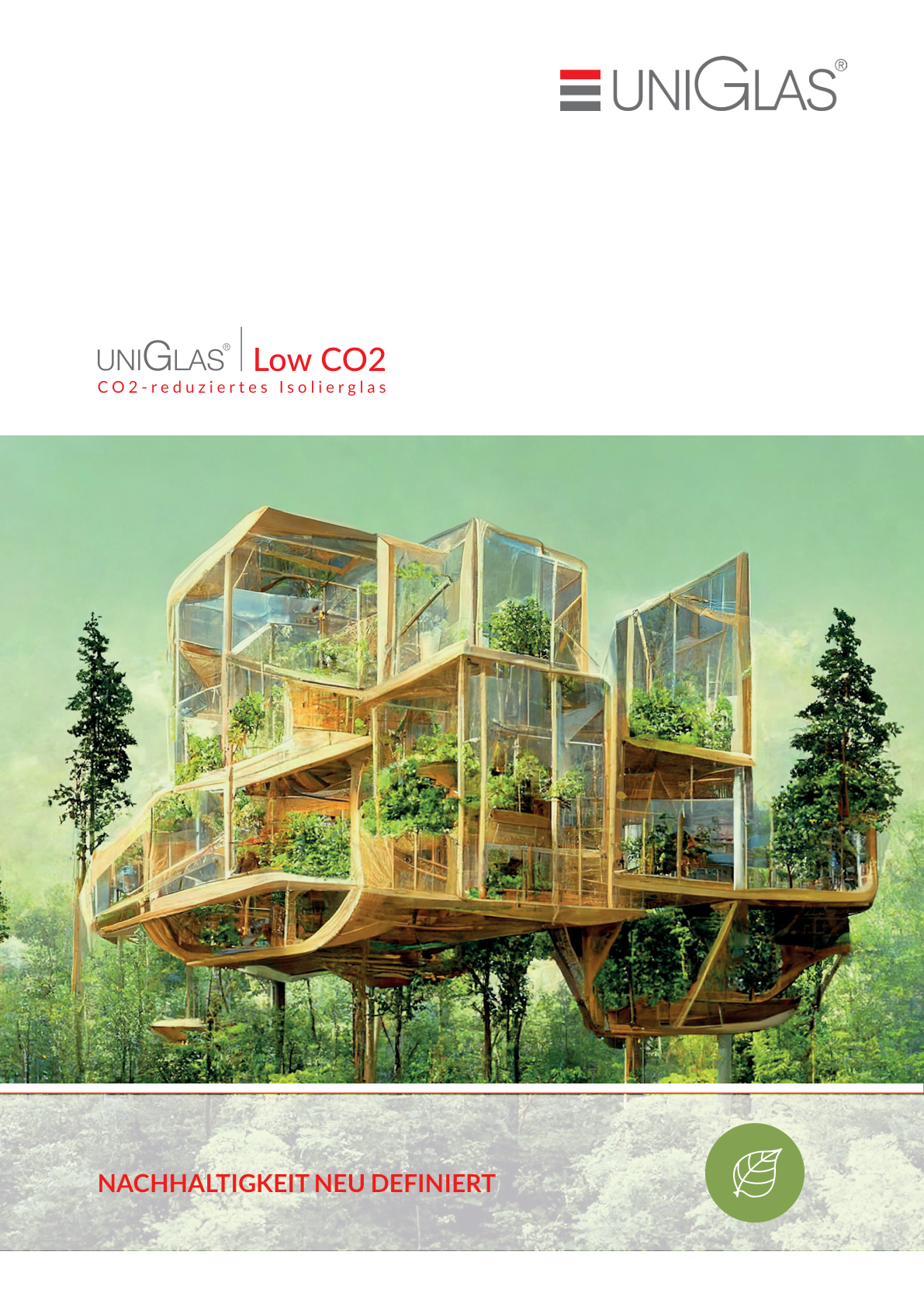
UNIGLAS® | LOW CO2 – low-carbon glass
UNIGLAS® | LOW CO₂ insulating glass significantly reduces carbon emissions through recycled glass, energy-optimised production and regional manufacturing – while still offering high quality and energy efficiency. The sustainable glazing combines climate protection, resource conservation and certified system safety for modern architecture.
UNIGLAS® | Low CO₂
Low CO₂ insulating glass for sustainable glass architecture
In today’s world, sustainable construction means one thing above all: the consistent reduction of CO₂ emissions along the entire value chain. UNIGLAS® | Low CO₂ is insulating glass produced using an approach that significantly reduces emissions – from the float glass production to further processing.
What does ‘low carbon’ mean in glass production?
Low carbon is a phrase used to describe glass products for which the energy usage, raw material consumption and logistics are systematically optimised. Key measures include the heightened use of recycled glass shards (cullet), the use of renewable energies, energy-efficient coating processes and the substitution of fossil fuels.
Even one tonne of cullet saves around 300 kg of CO₂, as recycled glass melts at lower temperatures. At the same time, the optical and technical properties are fully retained.
Sustainable manufacture of insulating glass – what makes UNIGLAS® unique
UNIGLAS® is committed to decentralised, regional production with short transport routes, automated energy-optimised production processes and reusable transport packaging.
This is achieved through:
- high levels of cullet for CO₂ reduction
- regional production, often within a radius of less than 300 km
- glass optimisation to reduce waste
- certified systems with EPDs and CE marking
Properties and added value
- Significantly reduced carbon balance sheet
- Circular construction material with virtually unlimited reusability
- Sustainable logistics and production
- High-end performance with full technical capability
In short: UNIGLAS® | Low CO₂ combines energy-efficient insulating glazing with consistent decarbonisation – for climate-friendly, economical and future-proof glass architecture.
DOWNLOAD
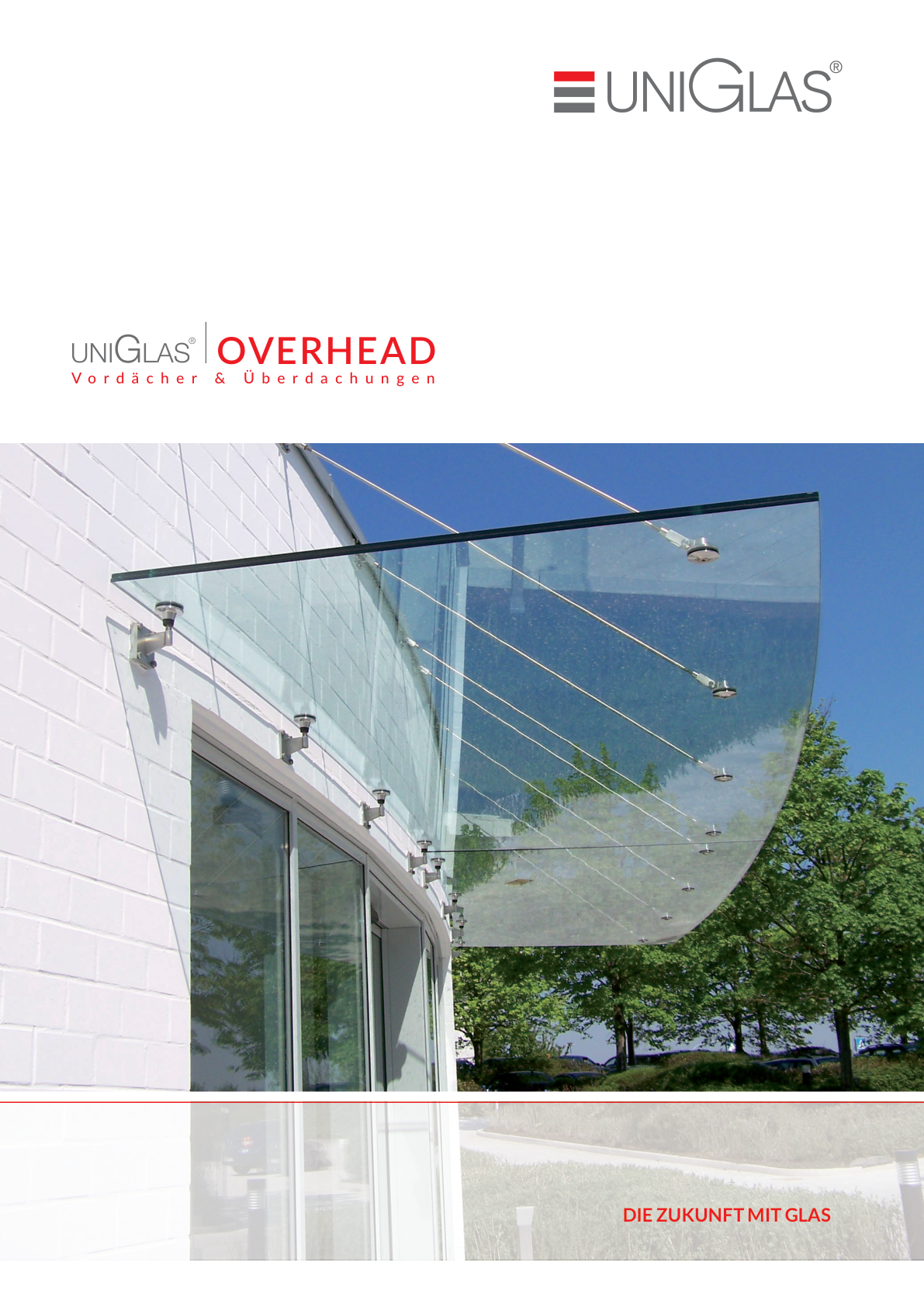
UNIGLAS® | OVERHEAD – canopies and porch roofs
UNIGLAS® | OVERHEAD projecting glass roofs made from robust laminated safety glass offer reliable weather protection coupled with maximum daylight incidence. The durable, easy-care systems combine modern design with tested safety and are ideal for stylish entrance and façade solutions.
UNIGLAS® | OVERHEAD
Safe glazing for overhead areas
Overhead glazing solutions place the highest demands on safety, load capacity and residual load-bearing behaviour. UNIGLAS® | OVERHEAD is a specially designed insulating glass for roof glazing, glass roofs and translucent constructs with a sloped or horizontal structure.
How does UNIGLAS® | OVERHEAD work?
The design is based on laminated safety glass on the room side, which guarantees residual load capacity in the event of breakage. Depending on the structural requirements, toughened safety glass or heat strengthened glass can be additionally used. The insulating glass design meets the requirements regarding heat insulation and technical safety.
This is achieved through:
- the use of laminated safety glass on the underside
- suitability for combining with heat insulation, solar control or sound insulation functions
- standard-compliant design for overhead glazing
- the optional use of triple insulating glass
Properties and added value
- High residual load capacity in the event of damage
- Energy-efficient roof glazing
- Customisable in line with structural requirements
- Safety and transparency in one system
In short: UNIGLAS® | OVERHEAD offers tested safety and heat insulation for modern glass roofs and overhead glazing.
DOWNLOAD
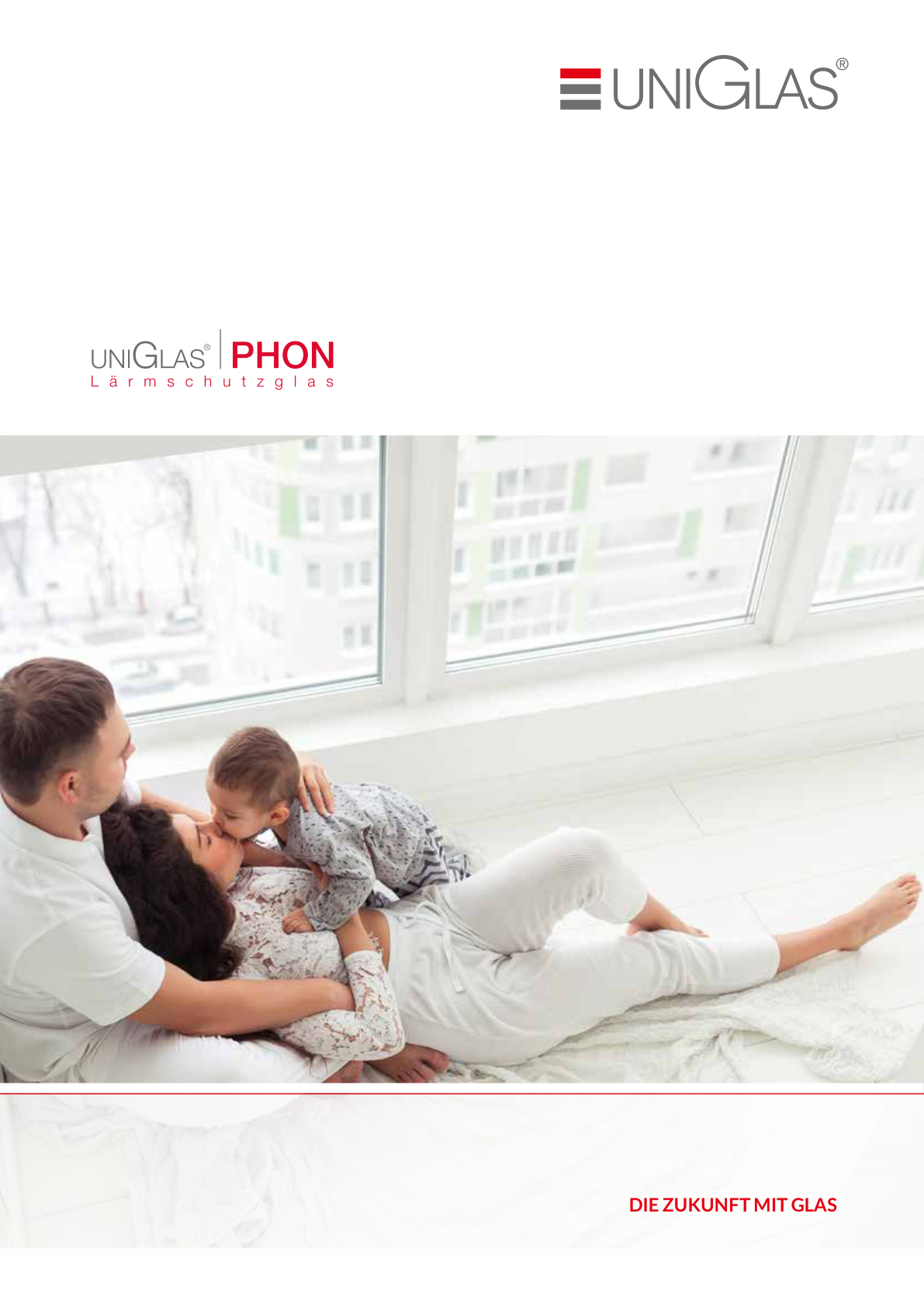
UNIGLAS® | PHON – sound insulation glass
UNIGLAS® | PHON sound reduction glass effectively reduces noise from road, rail and air traffic to provide more peace and quiet and greater living comfort. Specially tailored sound insulation structures with outstanding thermal insulation values can also be combined with solar control and safety functions.
UNIGLAS® | PHON
Sound insulation glass for more peace and quiet and greater living comfort
Noise is one of the biggest stress factors in urban areas. UNIGLAS® | PHON is a high-performance sound insulation glass for significantly reducing external noise in residential and commercial buildings.
How does UNIGLAS® | PHON work?
Sound insulation is significantly improved through asymmetric glass designs, different glass thicknesses and the use of special sound insulating interlayers in the laminated safety glass. The insulating glass design effectively reduces noise from air and road traffic.
This is achieved through:
- asymmetric glass structures
- sound-absorbing PVB interlayers
- optimised cavities
- suitability for combination with heat insulation or solar control coatings
Properties and added value
- Significantly reduced noise exposure
- Improved living and working comfort
- Customisable sound insulation values
- Energy-efficient insulating glass design
Areas of application
UNIGLAS® | PHON is suitable for buildings located by busy roads or railway lines or in areas subject to noise from air traffic and construction sites. Sound insulating glass also noticeably reduces interior noise levels and enhances comfort in industrial and commercial areas as well as in relation to noisy establishments such as restaurants or clubs.
In short: UNIGLAS® | PHON provides noticeable peace and quiet within buildings – without compromising on transparency or heat insulation.
DOWNLOAD

UNIGLAS® | SAFE – safety glass
UNIGLAS® | SAFE offers tested burglar, bullet and explosion resistance in line with EN 356, EN 1063 and EN 13541. Toughened safety glass, heat strengthened glass and laminated safety glass ensure high impact resistance, shard bonding and residual load capacity making them suitable for safe windows, doors, façades and safety barrier glazing.
UNIGLAS® | SAFE
Safety glass for protecting people and properties
Modern architecture demands transparent solutions that offer a high level of safety and security. UNIGLAS® | SAFE is safety glazing based on toughened and/or laminated safety glass to meet heightened needs for burglar resistance, penetration resistance and residual load capacity.
How does UNIGLAS® | SAFE work?
Toughened safety glass increases shock and impact resistance whereas laminated safety glass binds the shards in the event of breakage and holds the pane together. This is made possible by non-breakable interlayers. Depending on the safety requirements, different safety classes can be used.
This is achieved through:
- the use of toughened safety glass for increased shock resistance
- laminated safety glass with multi-ply safety interlayers
- combination with insulating glass structures
- adaptation to safety classes established by legal standards
Resistance categories and legal standards
UNIGLAS® | SAFE offers certified safety according to European standards.
Impact and penetration-resistant glazing is classified as belonging to categories P1A to P8B in accordance with EN 356. For higher safety requirements, bullet-resistant glazing in accordance with EN 1063 (BR classes) and explosion-resistant designs in accordance with EN 13541 (ER classes) are available.
UNIGLAS® | SAFE therefore covers the entire spectrum of modern safety requirements – from effective burglary protection to bullet and explosion resistance.
Properties and added value
- High personal and property protection
- Residual load capacity in the event of breakage
- Combinable with sound insulation, heat insulation or solar control
- Suitable for windows, doors and façades
In short: UNIGLAS® | SAFE combines transparency with certified safety for demanding construction tasks.
DOWNLOAD
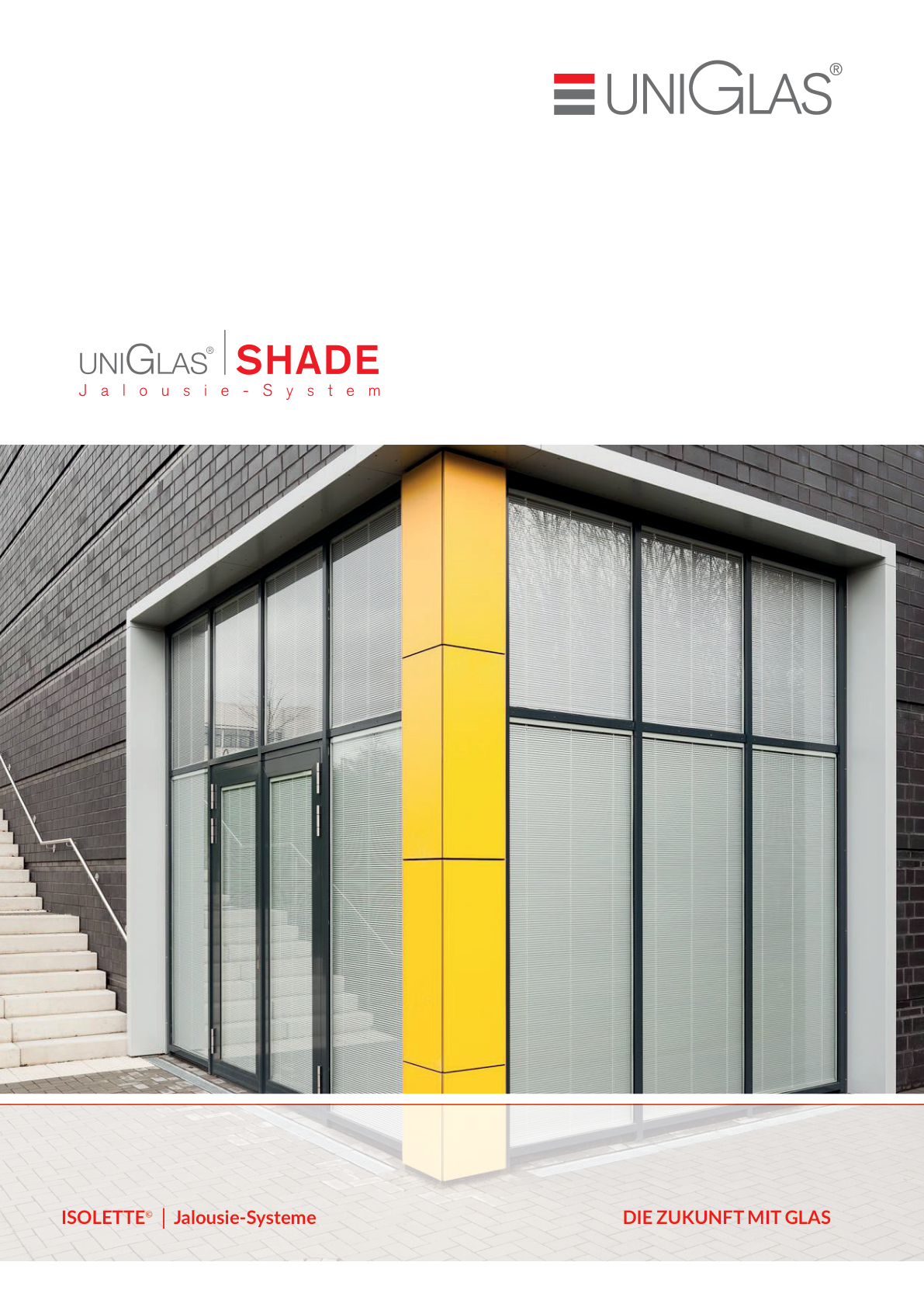
UNIGLAS® | SHADE Isolette – Venetian blind system
UNIGLAS® | SHADE Isolette is insulating glass with an integrated, maintenance-free blind in the cavity. It combines solar control, privacy protection and glare control with thermal insulation and enhanced sound insulation in an energy-efficient, ift-certified system that can be controlled manually or by a motor.
UNIGLAS® | SHADE Isolette
Integrated solar control in the cavity
External solar control is high maintenance and susceptible to the weather. UNIGLAS® | SHADE Isolette integrates a blind into the cavity within the insulating glass, where it is permanently protected.
How does UNIGLAS® | SHADE Isolette work?
A movable blind system that can be operated manually or electrically is located between the panes. The blind is protected against wind, rain and dirt and enables the light and privacy to be controlled as desired.
This is achieved through:
- blind integrated into the cavity
- sealed, low-maintenance design
- combination with low-e or solar control glass
Properties and added value
- Glare and privacy protection as required
- No cleaning of external equipment
- Reduced heat transmittance in summer
- Durable, protected technology
In short: UNIGLAS® | SHADE Isolette combines insulating glass and integrated solar control to form a low-maintenance complete solution.
DOWNLOAD
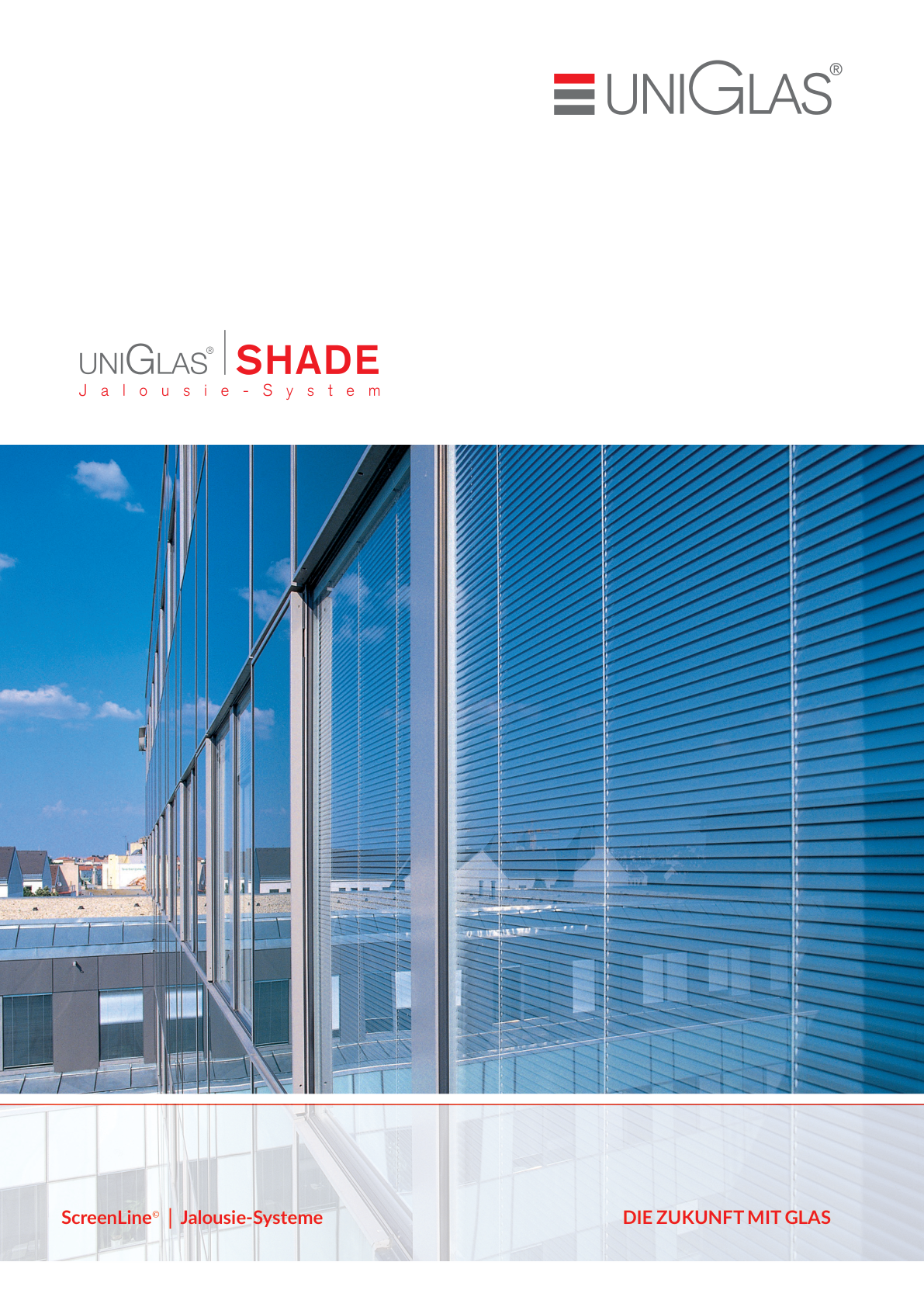
UNIGLAS® | SHADE Screenline – Venetian blind system
UNIGLAS® | SHADE ScreenLine® directly integrates a Venetian, pleated or roller blind into the insulating glass unit and permanently protects against sun, glare and unwanted onlookers. The dust and maintenance-free system optimises heat insulation in the summer, supports balanced daylight control and can be flexibly controlled manually, magnetically or by smart home integration.
UNIGLAS® | SHADE ScreenLine
Maintenance-free solar control in the insulating glass
UNIGLAS® | SHADE ScreenLine features an integrated Venetian or pleated blind in the cavity – ideal for energy-efficient windows with flexible light management.
How does UNIGLAS® | SHADE ScreenLine work?
The blind system is hermetically sealed within the insulating glass. It is operated manually, by motor or magnetically. As the system is fully enclosed within the glass structure, it is protected from dirt.
This is achieved through:
- an integrated blind within the insulating glass
- a hermetically sealed cavity
- various operating options
- combination with low-e or solar control glass
Properties and added value
- Individual light and privacy control
- Maintenance-free solar control solution
- Enhanced energy efficiency
- Ideal for residential and commercial buildings
In short: UNIGLAS® | SHADE ScreenLine offers integrated, durable solar control within the insulating glass – convenient and technically sophisticated.
DOWNLOAD
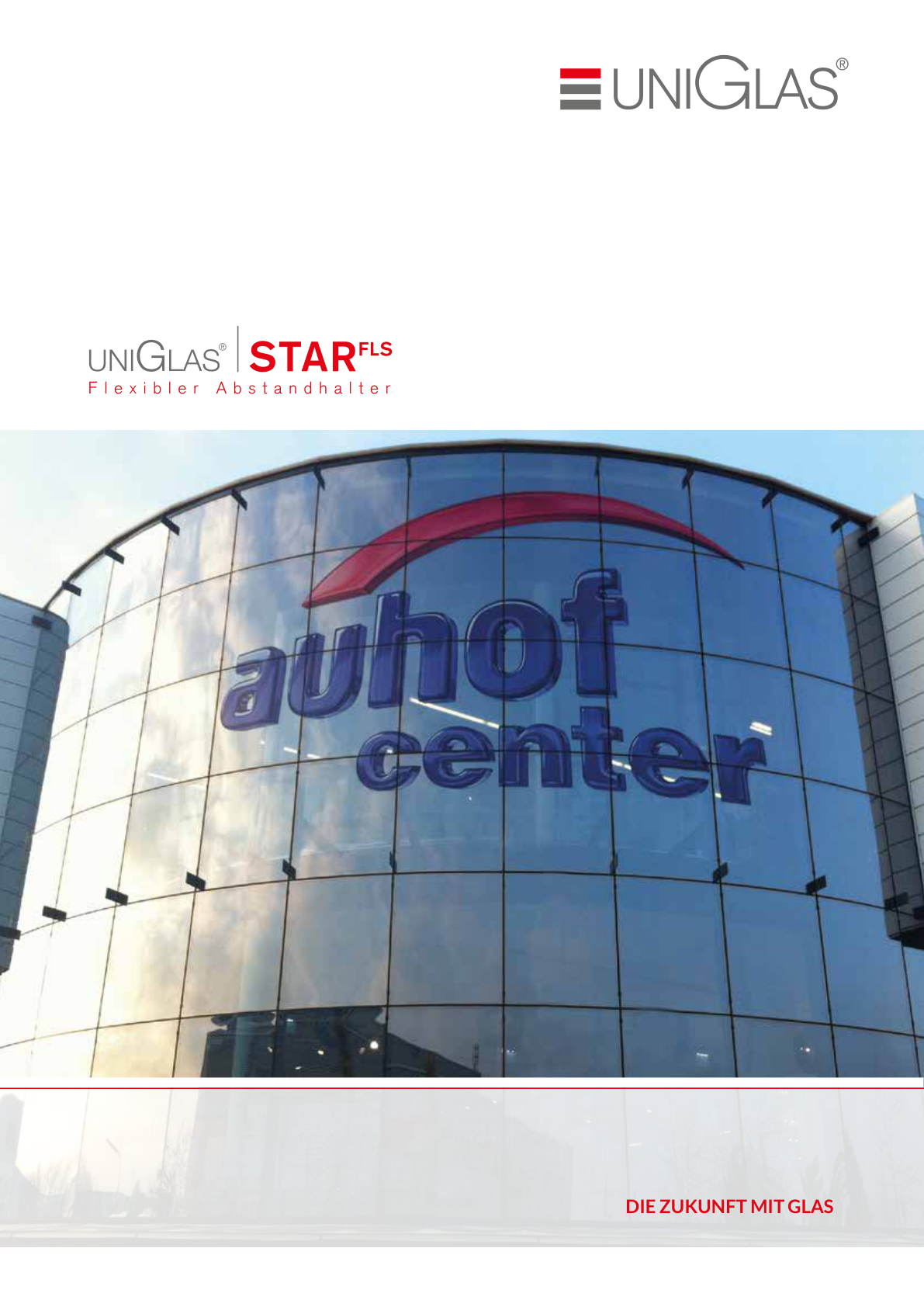
UNIGLAS® | STAR FLS – spacers
UNIGLAS® | STAR FLS is a non-metal, flexible spacer for insulating glass that reduces heat loss in the edge areas, improves the heat transmittance of the window and minimises condensation. The innovative silicone foam technology provides high energy efficiency, lasting impermeability and greater living comfort with modern window and façade systems.
UNIGLAS® | STARFLS
Modern glass façades place high demands on energy efficiency and building physics. In particular, the transition between the glass and the frame is considered a thermal weak point. This is where UNIGLAS® | STARFLS comes in by sustainably improving thermal insulation in the edge seal.
How does the flexible spacer work?
UNIGLAS® | STARFLS is the first non-metal spacer system made of structural foam with an integrated desiccant. The thermally bonded TSS-structure (thermo set spacer technology) provides excellent insulation qualities.
The flexible foam matrix is highly breathable and enables rapid moisture absorption, resulting in a low dew point. The combination of a multi-layered vapour barrier and polyisobutylene (PIB) ensures a permanently hermetic seal against moisture and gas loss.
Properties and added value for energy-efficient construction
- Up to 94% reduction of heat loss in the edge area
- Lower thermal conductivity for better U and Psi values
- Far lower levels of condensation and improved indoor climate
- Elastic edge seal to minimise stresses in the glass
- Matt surface without interfering reflections
- Durability in all product specifications
Suitable for modern glazing with insulating glass including structural sealant glazing (SSG).
In short: UNIGLAS® | STARFLS significantly improves the energy efficiency of insulating glass, reduces condensation in the edge area and provides durable, attractive glazing.
DOWNLOAD
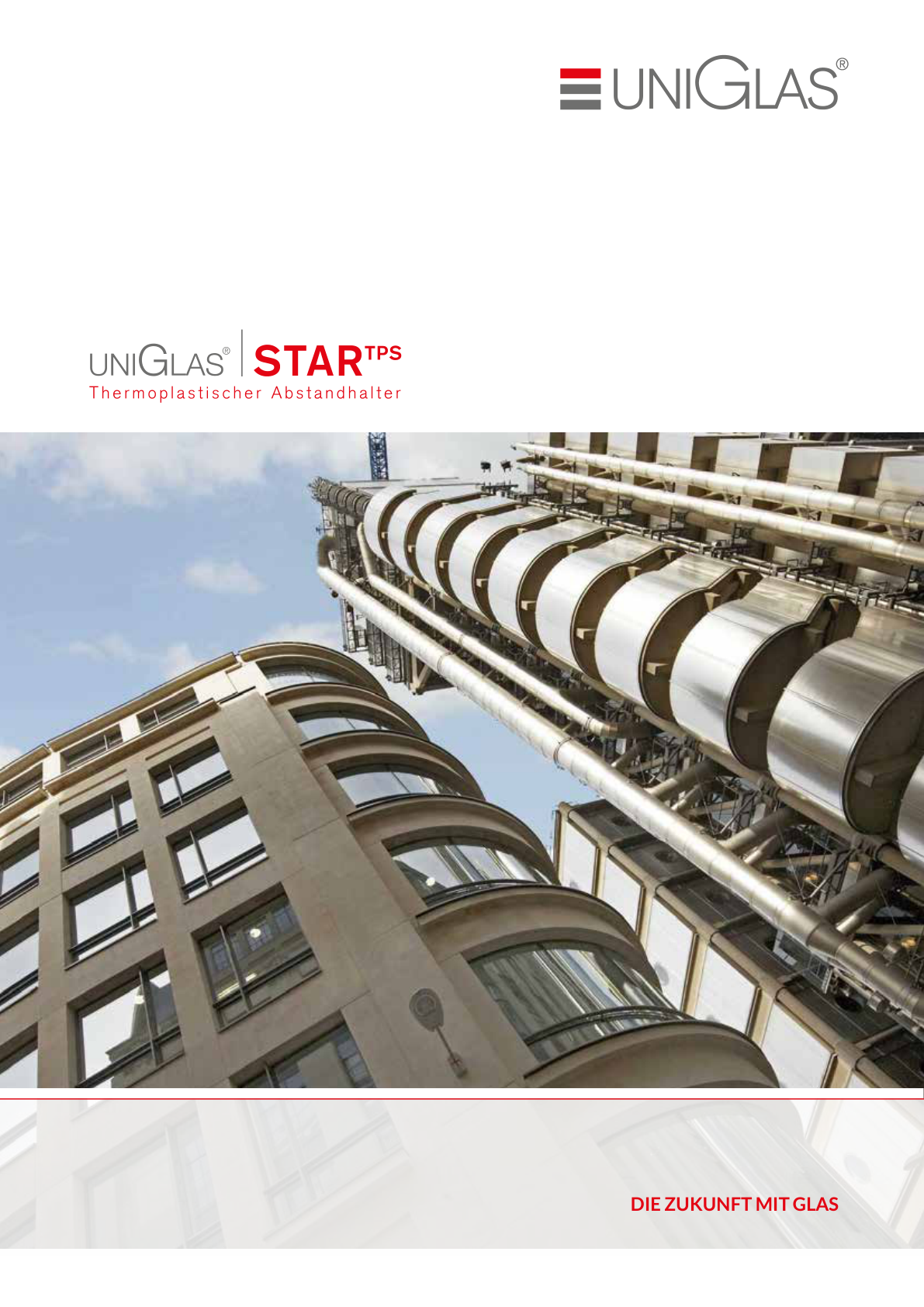
UNIGLAS® | STAR TPS – spacers
UNIGLAS® | STAR TPS is a non-metal thermoplastic spacer with a ‘warm edge’ that minimises thermal bridges in the glass edge, improves the heat transmittance of the window and reduces condensation. The flexible, durable system increases energy efficiency and living comfort with modern double and triple insulating glass solutions.
UNIGLAS® | STARTPS
Thermoplastic spacer for the ‘warm edge’
Construction-induced thermal bridges arise on the glass edge. UNIGLAS® | STARTPS minimises this weakness through the use of a non-metal thermoplastic spacer.
How does a TPS work?
The thermoplastic spacer (TPS) contains integrated desiccant and is made without any heat-conducting metals. This significantly improves the Ψ value in the edge area and optimises the heat transmittance value of the entire window.
This is achieved through:
- a non-metal, flexible edge seal
- precise, fully automated application
- uniform surface temperatures
Properties and added value
- Less condensation
- Enhanced energy efficiency
- Greater living comfort
- Durable, low-stress edge seal
In short: UNIGLAS® | STARTPS creates a permanently energy-optimised ‘warm edge’ in the insulating glass.
DOWNLOAD
UNIGLAS® | SUN – solar control glass
UNIGLAS® | SUN is a high-performance solar control glass that reduces overheating in summer while also offering a high level of transparency and good thermal insulation. Selective coatings enable the targeted control of solar energy and reflection – and are suitable for combining with sound, heat and safety functions.
UNIGLAS® | SUN
Selective solar control glass for modern façades
Large glazing solutions increase natural light transmittance and enable solar gains in winter. At the same time, they can result in overheating in the summer if there is no suitable solar control. UNIGLAS® | SUN is a high-performance solar control insulating glass that optimally combines transparency, thermal insulation and controlled solar transmittance.
How does UNIGLAS® | SUN work?
A selective precious metal coating is applied to the external pane. This filters the incident sunlight to enable plenty of natural light into the room while significantly reducing the thermal transmittance.
Depending on the design, the glass can be neutral, coloured or highly reflective.
This is achieved through:
- selective coating on the external pane
- optimised ratio between the solar heat gain coefficient and light transmittance
- combination with heat insulation, sound insulation or
safety functions
Properties and added value
- Reduced heating of indoor areas in summer
- High visible light transmittance
- Range of colour and reflection options for versatile designs
- Economical alternative to external solar control products
In short: UNIGLAS® | SUN enables buildings to be flooded with sunlight while still offering controlled heat transmittance and high energy efficiency.
DOWNLOAD
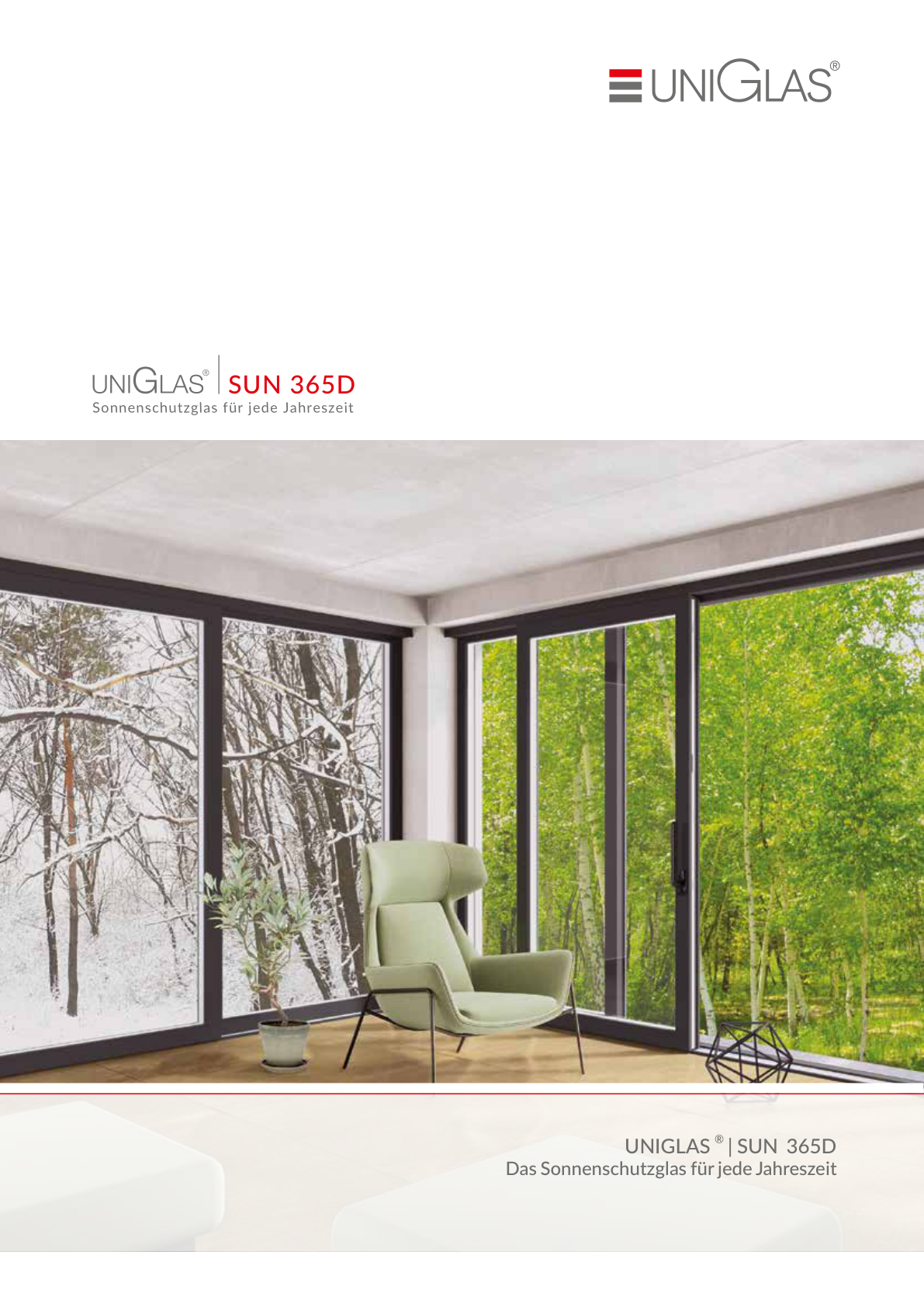
UNIGLAS® | SUN 365D – solar control glass for every season
UNIGLAS® | SUN 365D is a triple solar control glass with a combined solar control and heat insulation coating. It reflects up to 50% of solar energy, reduces overheating in the summer and offers excellent thermal insulation values in winter – for energy-efficient buildings that are comfortable all year round.
UNIGLAS® | SUN 365D
Sonnenschutzglas für jede Jahreszeit
Großzügige Glasflächen prägen die moderne Architektur. Gleichzeitig steigen die Anforderungen an Wärmeschutz, Sonnenschutz und Energieeffizienz. UNIGLAS® | SUN 365D ist ein leistungsfähiges Sonnenschutz-Isolierglas, das Sommer- und Winterkomfort in einem System vereint.
Wie funktioniert UNIGLAS® | SUN 365D?
Die äußere Scheibe ist mit einer nahezu unsichtbaren Edelmetallbeschichtung, in der Regel aus Silber, versehen. Diese reflektiert einen großen Teil der solaren Wärmestrahlung bereits auf der Außenseite, während sichtbares Tageslicht weiterhin in hoher Qualität in den Raum gelangt.
Im Scheibenzwischenraum sorgt eine Edelgasfüllung gemeinsam mit der Beschichtung für eine sehr gute Wärmedämmung im Winter.
Erreicht wird das durch:
- Sonnenschutz- und Wärmeschutzbeschichtung in Kombination
- 3-fach-Isolierglasaufbau mit Edelgasfüllung
- Optimierten Ug-Wert bei gleichzeitig hoher Lichttransmission
- Reduzierten Gesamtenergiedurchlassgrad (bis zu 36 % geringer als TOP
Pure)
Eigenschaften und Mehrwert
- Reduzierte sommerliche Überhitzung
- Energieeinsparung durch gute Wärmedämmung
- Hoher Tageslichteintrag für helle, behagliche Räume
Kurz gesagt: UNIGLAS® | SUN 365D ist ein ganzjähriges Sonnenschutzglas für energieeffiziente Gebäude mit ausgewogenem Raumklima.
DOWNLOAD

UNIGLAS® | TOP PURE – low-e glass
UNIGLAS® | TOP Pure is a highly transparent energy-saving glass with excellent thermal insulation (Ug up to 0.6 W/m²K), high light transmittance and optimised solar heat gains. The innovative coating and thermally enhanced edge seal result in greater living comfort, lower heating costs and sustainable CO₂ reductions.
UNIGLAS® | TOP Pure
Energy-saving glass for maximum transparency
Natural light and efficient thermal insulation are key requirements for modern buildings. UNIGLAS® | TOP Pure is a highly transparent energy-saving glass with excellent insulation performance.
How does UNIGLAS® | TOP Pure work?
An innovative precious metal coating allows visible light to pass through the glass almost unhindered while reflecting the long-wave heat radiation back into the room.
In triple insulating glass format, TOP Pure achieves a Ug value of up to 0.6 W/m²K with high light transmittance of up to 74%.
This is achieved through:
- highly selective coating technology
- double or triple insulating glass structure
- thermally optimised edge seal systems
Properties and added value
- Very low Ug value for low heating costs
- High solar gains (SHGC of approx. 54%)
- Neutral colour rendering with high light transmittance
- Better thermal comfort near windows
Certified quality according to DIN EN 1279-6
UNIGLAS® | TOP Pure is manufactured in accordance with DIN EN 1279. Part 6 of the standard regulates factory production control (FPC) and ensures that insulating glass remains permanently gas-tight, functional and performance stable.
For TOP Pure, that means:
- Controlled production processes
- Monitoring of the gas filling level and edge seal
- Long-term assurance of thermal insulation values (Ug value)
As a result, UNIGLAS® | TOP Pure combines maximum energy efficiency with certified, standard-compliant quality.
In short: UNIGLAS® | TOP Pure combines energy efficiency, living comfort and maximum transparency.
DOWNLOAD

UNIGLAS® | VITAL – wellness glass
UNIGLAS® | VITAL is a triple insulating glass with an elevated blue light content (approx. 490 nm) that promotes well-being, concentration and a good sleep rhythm. At the same time, it offers excellent thermal insulation (Ug = 0.5 W/m²K) and high energy efficiency – ideal for healthy, comfortable living and working environments.
UNIGLAS® | VITAL
Wellness glass with optimised light spectrum
Daylight affects our health, performance and well-being. UNIGLAS® | VITAL is a triple insulating glass with light transmittance in the melanopically effective area increased by 490 nm.
How does UNIGLAS® | VITAL work?
The spectral light transmittance between 380 and 570 nm is significantly increased by a special coating. At 490 nm, the glass achieves a transmittance level of up to 80%.
At the same time, excellent thermal insulation is also maintained (Ug up to 0.5 W/m²K).
This is achieved through:
- a spectrally optimised coating
- a triple insulating glass structure
- high light transmittance coupled with excellent energy efficiency
Promoting plant growth
UNIGLAS® | VITAL increases light transmittance in the blue spectral area, thereby supporting photosynthesis. The special coating shifts the maximum light transmittance into the area that is relevant for plants without reducing the overall light transmittance.
This results in stronger leaves, increased chlorophyll formation and better growth – ideal for living rooms and conservatories.
Properties and added value
- Supports the natural day-night rhythm
- Boosts concentration and well-being
- Improves lighting conditions while providing heat insulation
- Positive effect on plant growth
In short: UNIGLAS® | VITAL combines energy-efficient glazing with light quality that promotes good health.
DOWNLOAD